A sommelier is more than just a wine professional — it’s a storyteller, a guide, and a bridge between culture, cuisine, and craftsmanship. This role combines sensory knowledge, service expertise, and international hospitality skills. It’s a profession that blends art, science, and passion — connecting people through the universal language of taste.
What Does a Sommelier Do?
Sommeliers play a vital role in the hospitality and wine industries. They’re responsible for creating memorable dining experiences and elevating the standard of service.
Key Responsibilities:
Curate and update wine lists
Manage inventory and storage conditions
Advise guests on pairings and personal preferences
Conduct staff training and wine education
Organize tasting events and wine dinners
Beyond restaurants, sommeliers work in:
Luxury hotels and resorts
Airlines and cruise lines
Wine import and distribution companies
Wineries, vineyards, and tasting rooms
Wine education and consulting
Core Knowledge and Skills
To succeed, a sommelier must combine technical knowledge with service excellence and cultural awareness. Below is an overview of the essential skill set.
Core Sommelier Skill Map
Knowledge Area
Description
Key Learning Outcomes
Wine Theory
Study of grape varieties, terroir, and winemaking processes.
Identify regional styles, vintages, and production methods.
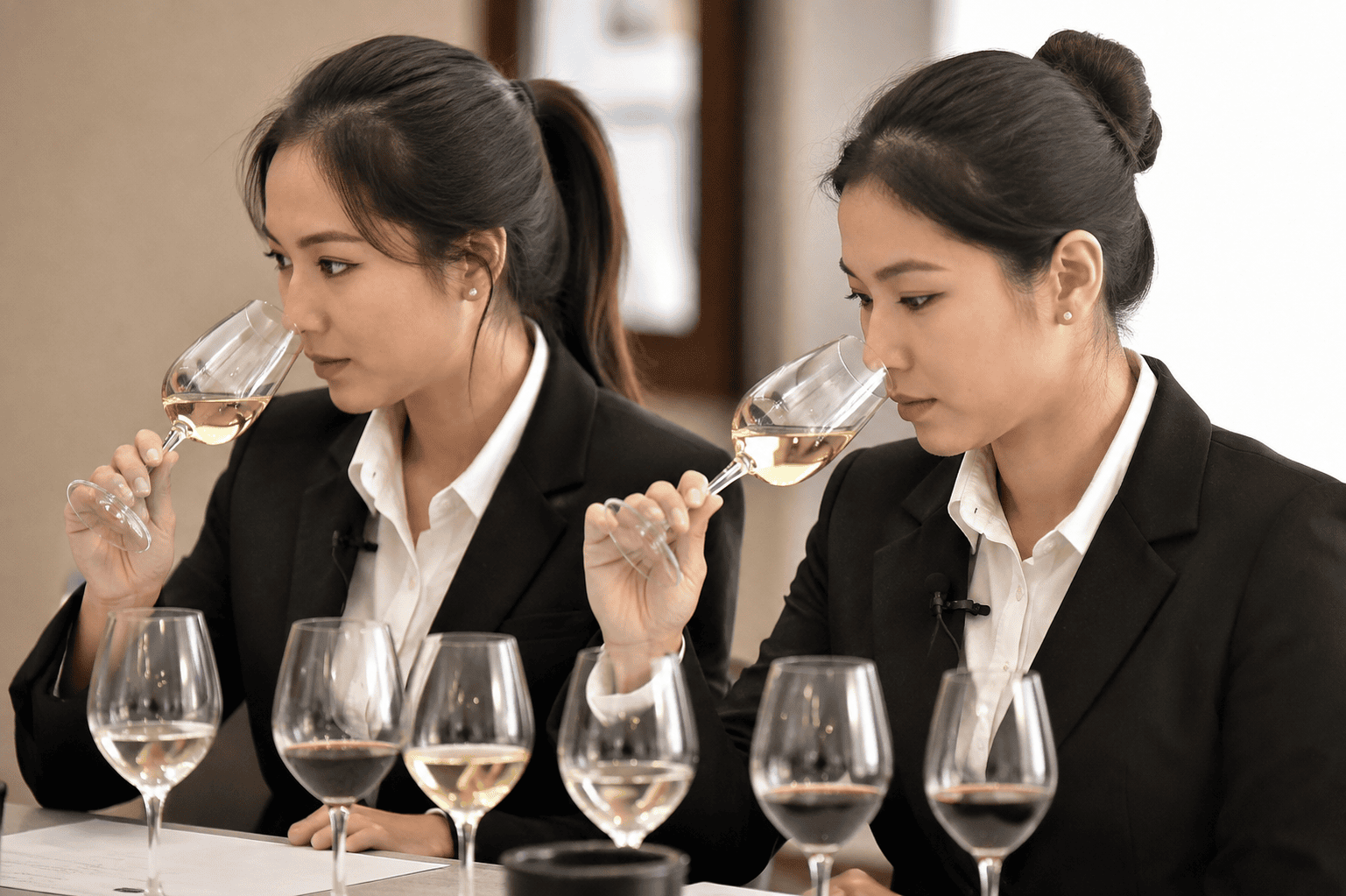
Tasting & Sensory Analysis
Developing a professional palate to evaluate wine objectively.
Describe aroma, flavor, structure, and quality with precision.
Food & Wine Pairing
Understanding how flavors interact with cuisine.
Recommend perfect pairings for guest satisfaction.
Service Techniques
Wine presentation, decanting, and storage practices.
Deliver seamless, confident service in fine dining.
Communication & Sales
Storytelling, guest engagement, and menu design.
Build trust and enhance customer experience.
Business & Cellar Management
Costing, purchasing, and inventory control.
Maintain profitability and sustainability.
Sommelier Training Pathway
Becoming a professional sommelier doesn’t happen overnight — it’s a step-by-step journey.
Learning Roadmap
Foundation of Sommelier Skills— Basic
Overview of wine regions of the world
Introduction to grape varieties and styles
Basic tasting techniques and service principles
Basic understanding of wine & food pairing
Foundation of Sommelier Skills — Advanced
Comparative tastings
Learn the major wine regions of the world
Cellar management and wine list design
Blind tasting and theory examination
Advanced service techniques
Strong understanding of wine & food pairing
Global wine business and export markets
Professional Career — Real Experience
Internship or placement in hotels/restaurants
Participation in international wine tours
Mentoring under certified sommeliers
Career Opportunities in the Wine Industry
A certified sommelier is respected worldwide and can work across multiple sectors.
Top Career Paths:
Restaurant or Hotel Sommelier – lead beverage programs and service teams
Wine Buyer / Consultant – select wines for importers, retailers, and restaurants
Brand Ambassador – represent wineries or wine regions internationally
Wine Educator – teach at academies, schools, and private institutions
Wine Tourism Manager – host tours, tastings, and vineyard experiences
Salary Range (Global Averages):
Region
Entry-Level
Experienced
Head Sommelier
Thailand / Asia
฿25,000–฿50,000
฿60,000–฿110,000
฿130,000+
France / Europe
€2,000–€3,500
€3,500–€5,000
€6,000+
International Hotels
Competitive packages with housing and travel benefits
Why Study at WSA Bangkok
WSA Bangkok offers internationally recognized wine programs that combine classroom learning, sensory training, and real-world experiences. You’ll study under certified professionals and gain access to global wine certifications that open doors worldwide.
Our Advantages:
Professional instructors with international experience
Real tasting sessions and practical service practice
Study pathways that connect to wine tours in France and winemaker visits
Networking with global wine professionals
Program Highlights:
Foundation to Advanced Sommelier Courses
International Wine Business Modules
Field Trips and Wine Tasting Workshops
Support for Career Placement and Certification Exams