
If you have ever ordered a full-bodied red wine with a bowl of Tom Yum Goong and found it completely unpleasant — you were not doing it wrong. The wine was wrong.
Thai cuisine is one of the most challenging food cultures in the world when it comes to wine pairing. Not because it is inferior to European food, but because it is more complex. A single Thai dish typically presents five flavour dimensions simultaneously: sour, salty, sweet, spicy, and umami. Most European dishes lead with one or two dominant flavours and build around them.
European wines were engineered over centuries to complement European food. Applying them to Thai cuisine requires a different kind of knowledge — and that is precisely what this guide provides.
At Wine & Spirit Academy Bangkok, we have developed specific principles for pairing wine with Thai food, drawing on over 18 years of expertise from WSA founder Anthony Caradec and hundreds of real pairing experiments with chefs and tasters across Bangkok. This article is the result of that work.
The tannins in heavy red wines such as Cabernet Sauvignon or Barolo interact chemically with capsaicin from chilli, amplifying the heat several times over. Imagine drinking a Bordeaux alongside a fiery Thai green curry — the result is an almost unbearable burn that ruins both the wine and the dish.
Golden rule: The spicier the food, the more aggressively you should avoid high-tannin red wines.
2. Residual Sweetness Tames Heat
Wines with a small amount of residual sugar — such as off-dry Riesling or Gewurztraminer — act as a buffer against spice. The principle is the same as reaching for a sweet lassi or coconut milk when your mouth is on fire. A hint of sweetness coats the tongue before capsaicin reaches the pain receptors, dramatically reducing the burning sensation.
3. High Acidity Is Your Best Friend with Thai Food
Many Thai dishes carry pronounced acidity from lime juice, tamarind, and rice vinegar. Wines with high natural acidity — such as Sauvignon Blanc, Riesling, or Chablis — will harmonise with that acidity rather than fight it, creating a refreshing, balanced sensation on the palate. Low-acid wines, by contrast, will taste flat and heavy alongside Thai food.
4. High Alcohol Amplifies Heat
Wines above 14% ABV will dramatically intensify the heat of spicy Thai dishes. For anything genuinely fiery, look for wines below 12.5% alcohol. This is one reason Mosel Rieslings — often as low as 7–8% — are legendary companions for Asian cuisine.
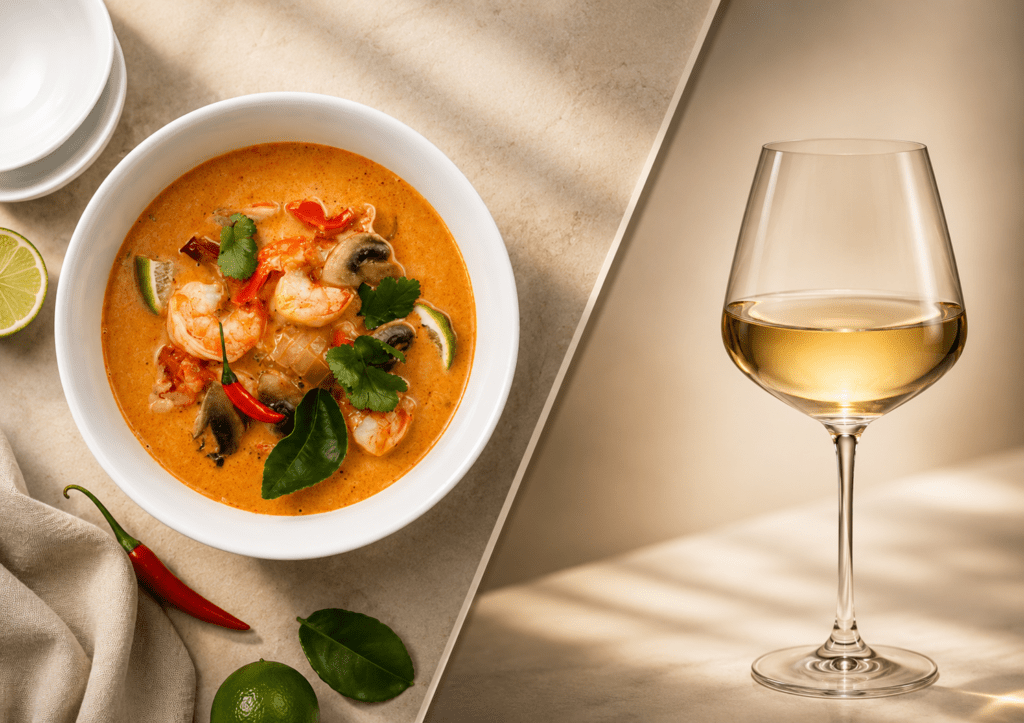
Tom Yum is one of the most complex dishes in Thai cuisine, layering intense sourness from lime, heat from bird’s eye chilli, saltiness from fish sauce, and the aromatic depth of galangal, lemongrass, and kaffir lime leaves.
Best pairings:
Avoid: Cabernet Sauvignon, Malbec, Syrah — any high-tannin red will amplify the heat to an uncomfortable degree.
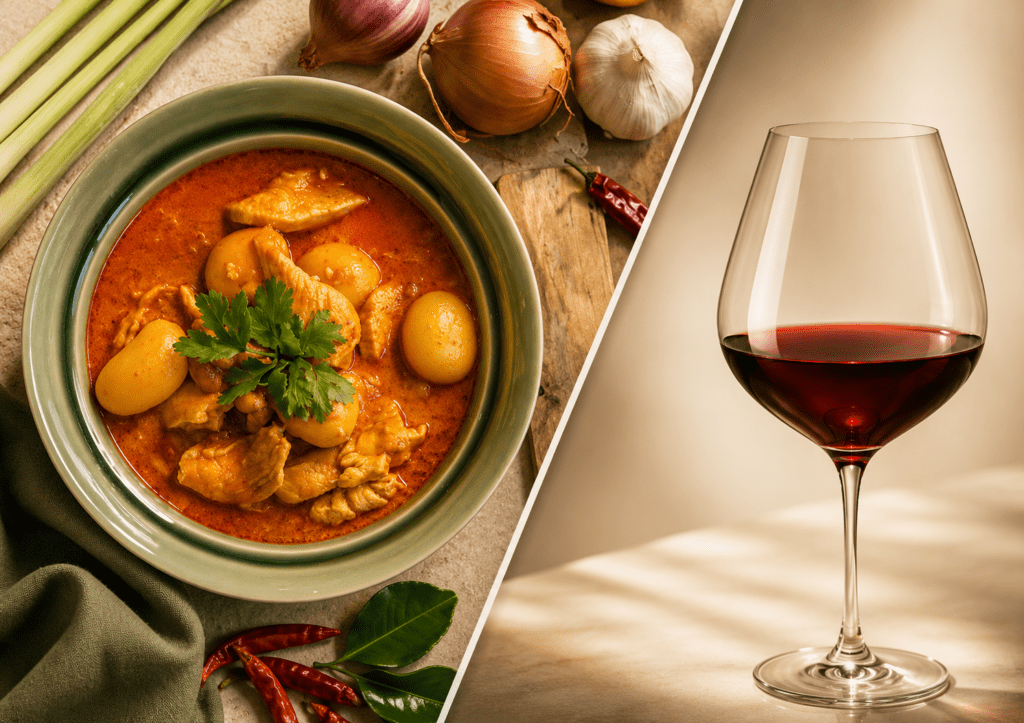
Massaman is intensely spicy but tempered by rich coconut milk, which coats the palate and creates more room for the wine to work. This makes it slightly more forgiving than Tom Yum.
Best pairings:
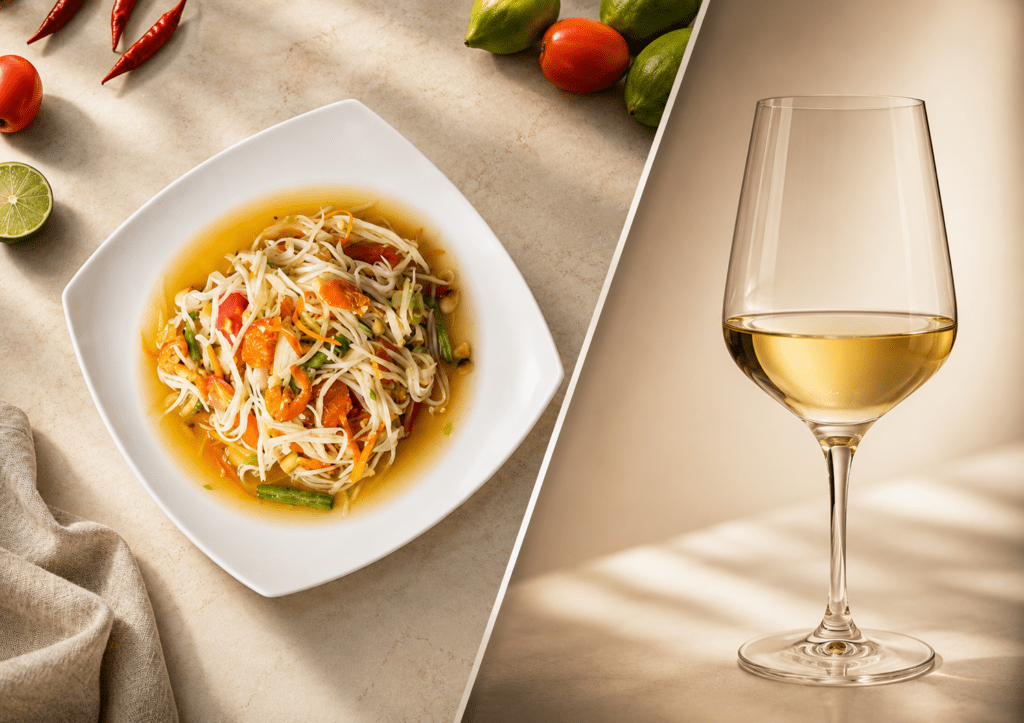
Som Tum represents the pinnacle of Thai pairing difficulty — it combines extremely sour lime, fierce chilli heat, salty fish sauce and dried shrimp, and umami from fermented ingredients, all in one small plate.
Best pairings:
Avoid absolutely: Any red wine, and any white wine above 13% alcohol.
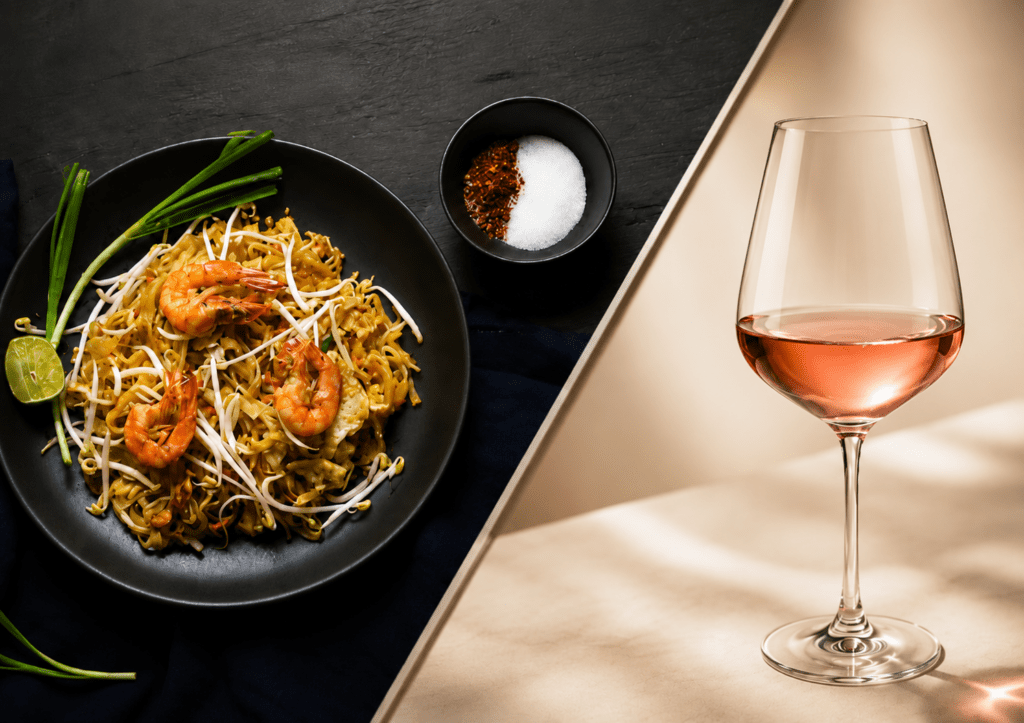
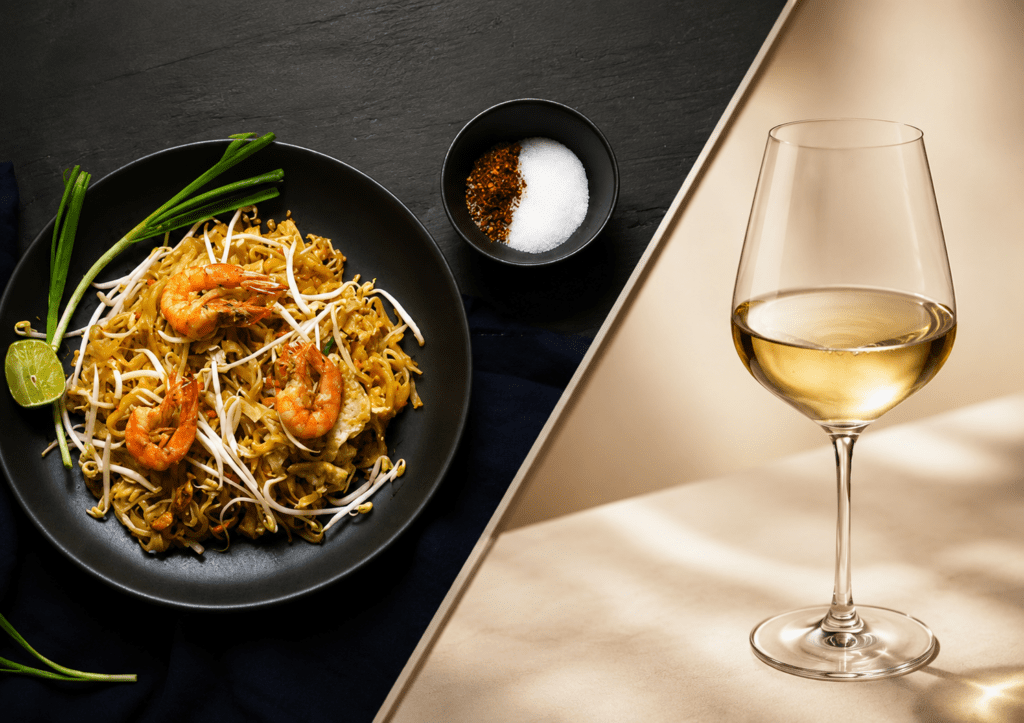
Pad Thai has the most naturally balanced flavour profile in Thai cuisine — sweetness, controlled sourness, savoury depth from fish sauce, and richness from egg and noodles. It is the easiest Thai dish to pair with wine, making it a good starting point for novices.
Best pairings:
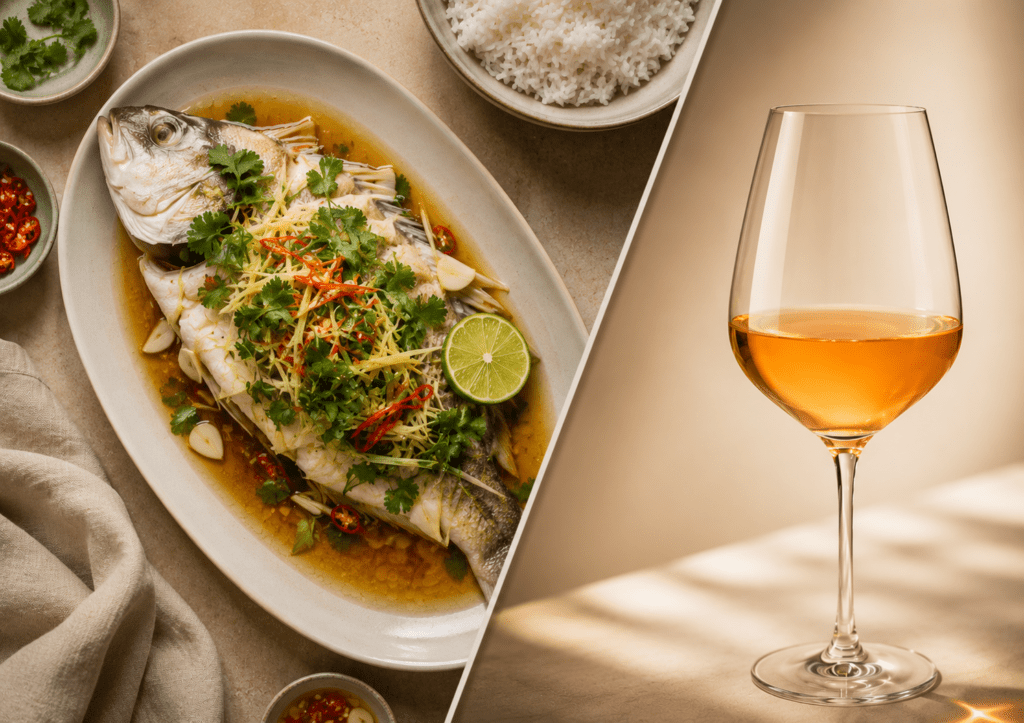
One of the most elegant Thai dishes, combining fresh white fish, a vibrant lime and chilli broth, garlic, and coriander. It is also one of the easiest Thai dishes to pair well.
Best pairings:
Quick Reference: Thai Food and Wine Pairing at a Glance
Heavy Cabernet Sauvignon
High tannins combined with Thai chilli heat create a chemical reaction that multiplies the burning sensation dramatically. Cabernet from Napa Valley or Bordeaux is a magnificent wine — just not with spicy Thai food.
Heavily Oaked Chardonnay
The butter and vanilla notes from heavy oak treatment clash with Thai spices and aromatics, creating a cloying, uncomfortable sensation on the palate.
Any Wine Above 14% ABV
Regardless of colour, high-alcohol wines amplify capsaicin heat. This is not a matter of preference — it is chemistry.
Very Sweet Dessert Wines (Late Harvest, Sauternes)
The extreme sweetness of these wines collides with the natural sweetness already present in Thai sauces, creating a heavy, cloying result. Reserve them for dessert or foie gras where they belong.
1. Judge the dish’s dominant flavour, not its main ingredient Do not think “prawn = white wine.” Ask what the dish’s dominant characteristic is. Tom Yum with prawns is defined by heat and acidity — choose your wine accordingly.
2. Taste before you commit When dining at a Thai restaurant with a wine list, ask to try a small pour before ordering a full bottle. A few seconds with the wine on your palate alongside a bite of the dish will tell you everything.
3. Serve white wines colder than usual A well-chilled white wine at 7–9°C will be more effective at countering chilli heat than the same wine served at 12°C. Use the temperature as a tool.
4. Sparkling wine is an underrated all-rounder Champagne, Crémant, Prosecco, or Cava are excellent at Thai tables. The bubbles cleanse the palate between bites, refresh the senses, and reset the heat — making them ideal for multi-dish shared meals.
5. When in doubt, hire a sommelier The most efficient path to a perfect wine experience with Thai food at your event or dinner is to have a certified sommelier manage the selection, sourcing, and service. This is what WSA does best.
This guide is a starting point. Truly mastering wine and food pairing — especially across Asian cuisines — requires developing your tasting skills, understanding wine structure, and building flavour memory. These are exactly the skills we develop through our programmes at Wine & Spirit Academy Bangkok.
For hospitality professionals, our HORECA Training programme is specifically designed to develop wine and food pairing expertise for F&B staff working in Bangkok’s hotels and restaurants.
For individuals, our FSS Sommelier Classes and Wine Tasting Courses will take you from curious beginner to confident wine professional.
And if you need a professional sommelier to manage the wine experience at your private dinner, corporate event, wedding, or gala in Bangkok, our certified team is available throughout Thailand.
→ Contact Us Today https://wsa-bangkok.com/contact/
→ Browse All Courses https://wsa-bangkok.com/services/wine-classes/
→ Sommelier Classes https://wsa-bangkok.com/services/fss-sommelier-classes/

Can you drink red wine with Thai food?
Yes, but the choice of red wine is critical. Low-tannin, fruit-forward reds such as Pinot Noir, Gamay (Beaujolais), or a light Grenache can pair beautifully with Thai dishes that are not intensely spicy — such as Massaman, grilled chicken, or Thai beef salad. Avoid heavy, tannic reds with anything genuinely fiery.
Does an expensive wine pair better with Thai food?
Not necessarily. A well-chosen German Riesling at a modest price point will almost always outperform a prestigious Napa Cabernet with Thai food, regardless of the price difference. Structural compatibility matters far more than prestige or price.
Does Champagne work with Thai food?
Exceptionally well. The acidity, minerality, and palate-cleansing bubbles of Champagne or other quality sparkling wines make them outstanding companions for shared Thai meals. Brut Champagne, dry Crémant d’Alsace, and dry Prosecco are all excellent choices.
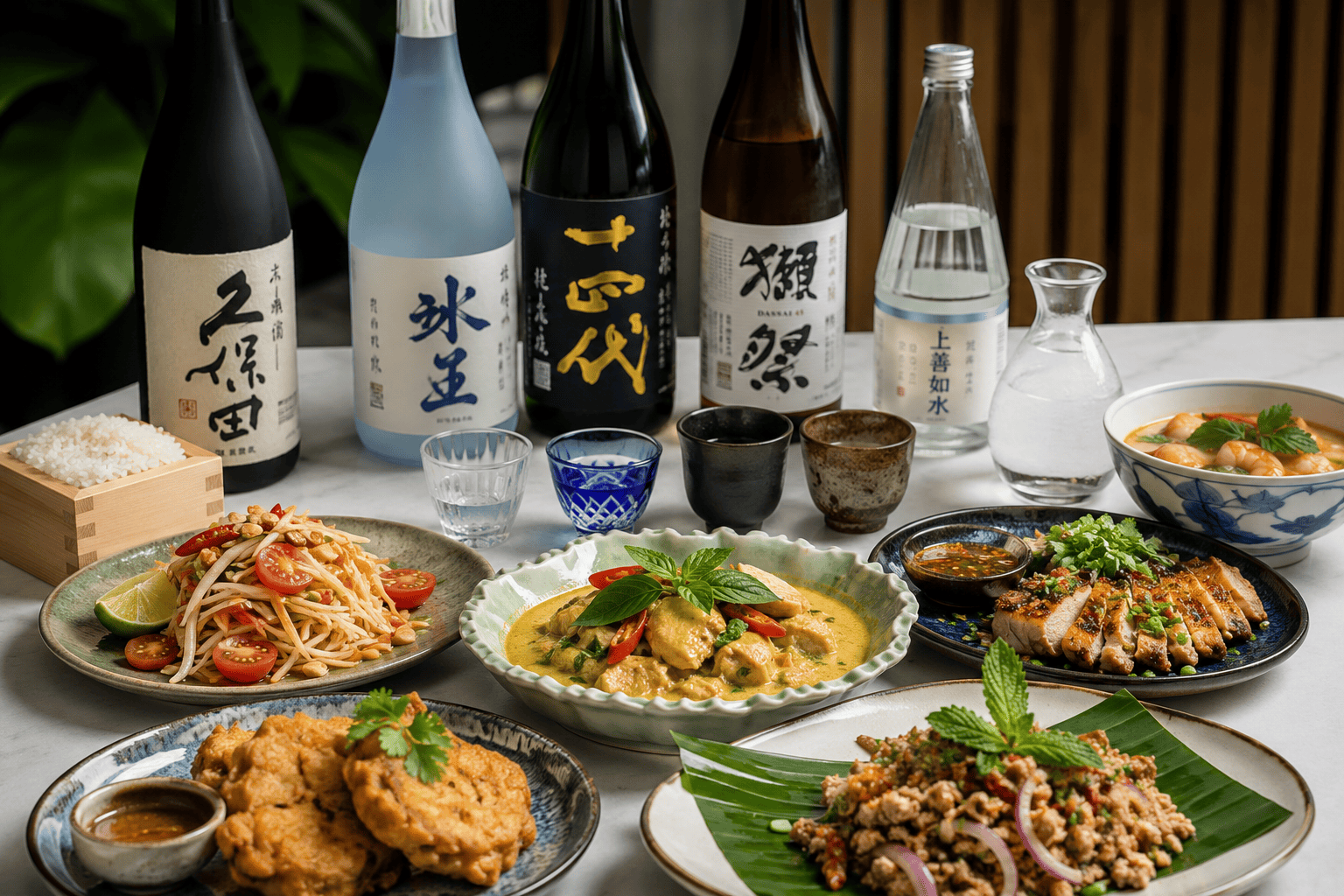
Can sake pair with Thai food?
Yes, and in some cases better than wine. A Junmai Daiginjo sake has no tannins whatsoever, very clean flavour, and high umami that connects naturally with fish sauce and shrimp. It works particularly well with seafood-based Thai dishes and salads. WSA Bangkok also offers sake education and pairing programmes for those who want to explore this further.
Article by Anthony Caradec, Founder of Wine & Spirit Academy Bangkok — certified wine and spirits professional with over 18 years of experience across Europe and Southeast Asia.
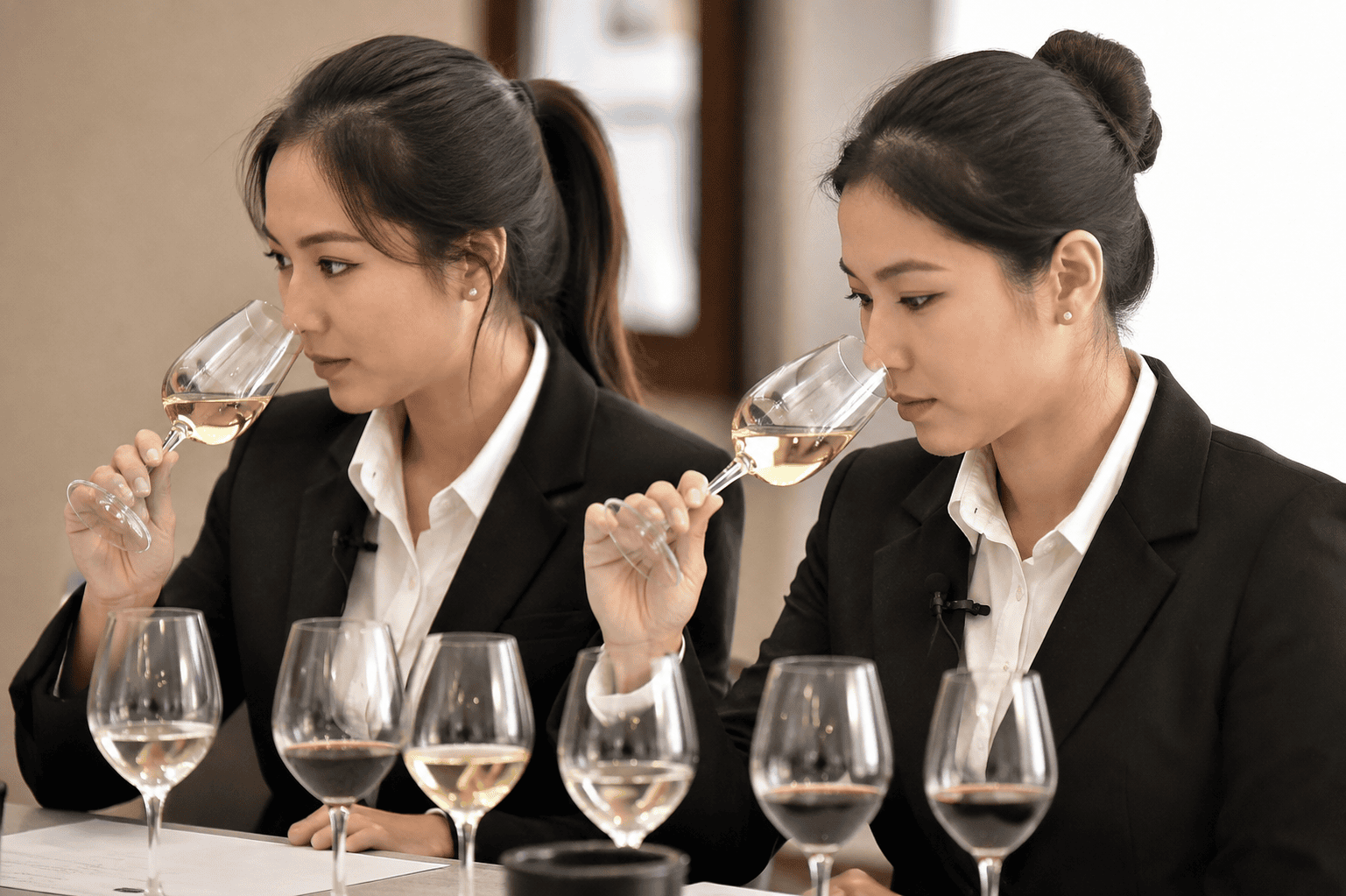
The most complete certified wine program in Bangkok is the
By Wine & Spirit Academy (WSA Bangkok) The short answer:

Short answer: WSET is the global reference for structured wine