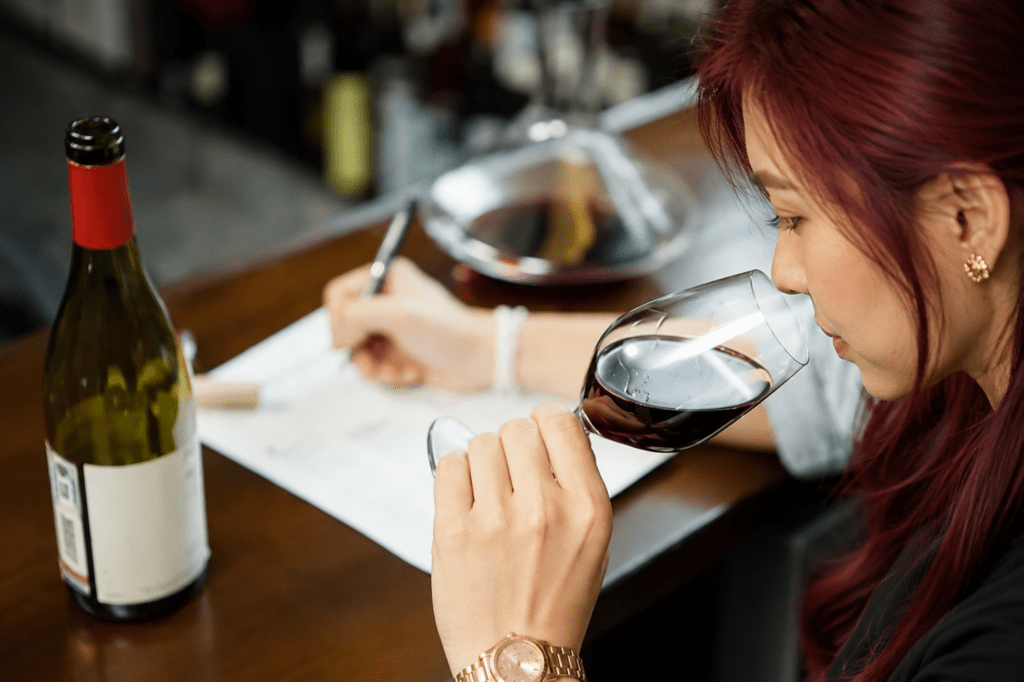
Most people drink wine. Very few people actually taste it.
The difference is not snobbery — it is attention. When a professional sommelier picks up a glass, they extract an enormous amount of information before a single drop reaches their lips. They can identify the grape variety, the likely region, the approximate vintage, the quality of the winemaking, and how the wine will evolve — all from a careful, structured evaluation that takes less than two minutes.
At Wine & Spirit Academy Bangkok, this method is the foundation of every course we teach, from our beginner wine classes to our FSS Sommelier certification programme. This is what our students learn in their very first session.
When most people drink wine, they register one or two impressions — “this is dry,” “this is fruity,” “I like this” — and move on. A trained sommelier, by contrast, works through the glass systematically, isolating each sensory dimension in sequence before forming an overall judgement.
This structured approach matters for three reasons.
First, it trains your palate. The more deliberately you taste, the more you notice, and the more you notice, the more sophisticated your ability to identify and enjoy wine becomes. Like any perceptual skill — learning to hear individual instruments in an orchestra, or identifying spices in a dish — wine tasting improves dramatically with structured practice.
The 5-step method is the gateway to all three of these benefits.
Before walking through the five steps, a few practical notes on the conditions that make wine tasting work properly.
The right glass matters more than you think. A proper wine glass — tulip-shaped, large enough to swirl without spilling, clear so you can evaluate colour — makes a measurable difference to what you smell and taste. The shape concentrates aromas at the rim. A tumbler or a narrow flute does not. For tasting purposes, use an ISO standard tasting glass or any large-bowled stemmed wine glass. You do not need to spend a lot of money — you need the right shape.
Fill the glass only one third full. This leaves room to swirl without spilling and allows aromas to concentrate in the upper bowl before reaching your nose.
The right temperature is essential. A wine served too cold mutes its aromas and flavours. A wine served too warm amplifies its alcohol and makes it taste heavy. As a general rule: white wines at 8–12°C, light reds at 12–14°C, full-bodied reds at 16–18°C. If a red wine arrives too warm, ten minutes in an ice bucket will bring it to the right temperature.
Taste in good light. You need to be able to evaluate colour accurately. Natural daylight or a white background is ideal.
Avoid strong scents. Perfume, cologne, scented candles, and cooking smells all interfere with your ability to assess a wine’s aroma. This is one reason professional tasting rooms are kept neutral.
Now, the five steps.
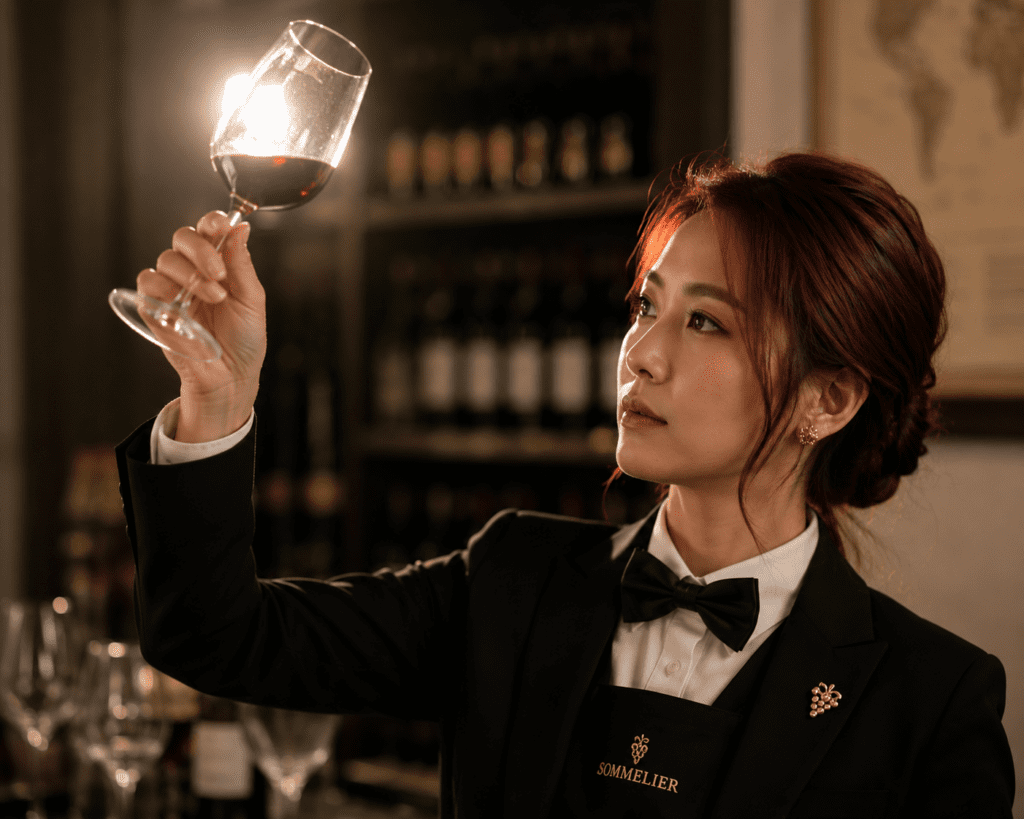
Pick up your glass by the stem — not the bowl, which warms the wine and leaves fingerprints that obscure the colour — and hold it at a slight angle against a white background or a light source. Evaluate three things.
Colour and Hue
For white wines, the colour spectrum runs from almost water-clear through pale lemon, gold, amber, and deep brown. For red wines, from bright purple through ruby, garnet, brick-red, and tawny brown.
Colour tells you a great deal. A white wine with deep golden colour is either made from a grape variety that produces rich wines (Viognier, oaked Chardonnay), has been aged in oak, or is older. A white wine that is very pale and almost clear is likely young, high in acidity, and made from a neutral grape (Muscadet, young Riesling, Pinot Grigio). A red wine with a purple-blue tinge at the edge is almost certainly young. A red wine with a brick-red or orange edge has aged — either in bottle or in oak — and the tannins have softened considerably.
Intensity
Is the colour deep and opaque, or light and translucent? You should be able to read text through a light-bodied red wine like Pinot Noir. You should not be able to see through a glass of young Cabernet Sauvignon or Malbec. Intensity often correlates with body, concentration, and the warmth of the growing climate.
Clarity and Condition
A healthy wine is clear, not cloudy. Some unfiltered natural wines show a slight haze, which is intentional. Bubbles clinging to the sides of a still wine glass may indicate a small amount of residual CO₂, which can be a winemaking choice or a fault depending on the wine. Sediment in an older red wine is normal and expected — it is a sign of natural development.
What Step 1 tells you: Approximate age, likely body, winemaking style, and whether the wine appears healthy.
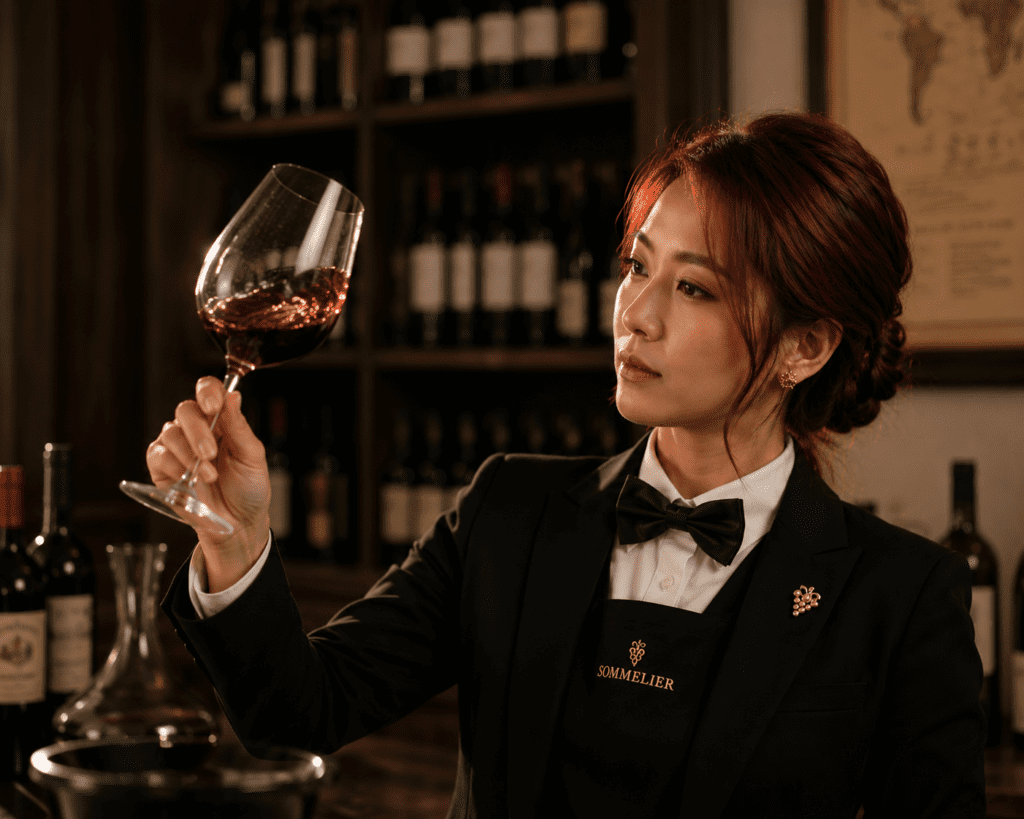
Before you smell the wine, swirl it. This is not an affectation — it serves a precise purpose. Swirling the wine exposes it to oxygen and dramatically increases the surface area of liquid in contact with air, releasing volatile aromatic compounds that would otherwise remain trapped.
To swirl without splashing: keep the base of the glass on the table and move it in a small, confident circle. Practice will make it automatic within a few sessions. Once you are comfortable, you can swirl the glass in the air — but the table method is more controlled and equally effective.
After swirling, notice two things.
The Legs (or Tears)
Look at the trails of wine running slowly down the inside of the glass after swirling. These are called “legs” or “tears.” Slow, thick legs indicate higher alcohol and/or residual sugar. Fast, thin legs indicate lower alcohol and drier style. Legs are a visual indicator but not a quality indicator — they tell you about the wine’s body, not its quality.
The Release of Aromas
Even before you bring the glass to your nose, you may notice the wine beginning to open up — a faint scent rising from the bowl. This is a sign that the wine is expressive and the swirl has done its job. Some wines need more time to open up, especially structured reds. If the wine seems closed or muted after the first swirl, give it another and wait 30 seconds before smelling.
What Step 2 tells you: Body, alcohol level, and whether the wine needs time to open up.
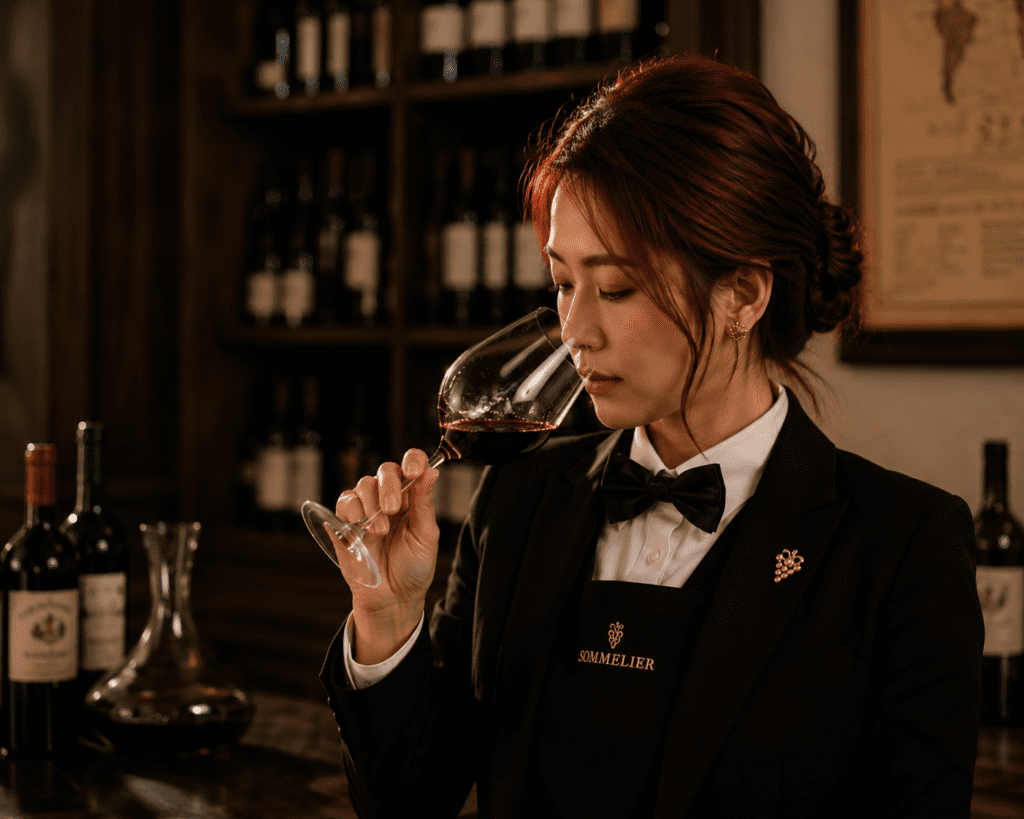
This is the most important step, and the one that separates casual drinkers from trained tasters. Approximately 80% of what we perceive as “taste” is actually smell. The tongue can only detect five basic sensations — sweet, sour, salty, bitter, and umami. Everything else — the blackcurrant, the vanilla, the tobacco, the minerality — is detected by your nose.
Professional sommeliers divide their smell evaluation into two phases.
First Nose — Before Swirling (or Immediately After)
Bring the glass to your nose immediately after the first swirl and take one deliberate, slow sniff. Do not inhale aggressively — the aromatic compounds are volatile and a brief, focused inhalation is more effective than a sharp one. Then pull the glass away and process what you noticed.
This first impression is often the most honest — before your brain starts filtering and interpreting. What did you notice first? Fruit? Oak? Earth? Flowers? Spice?
Second Nose — After Swirling
After a second swirl, go back in with more intent. This time, try to identify specific aromas by moving through the major categories:
Fruit aromas:
Floral aromas:
Earthy and mineral aromas:
Oak-derived aromas (from barrel ageing):
Secondary and tertiary aromas (from winemaking and ageing):
A Note on Wine Faults
Learning to recognise wine faults through smell is an important part of sommelier training. The most common:
What Step 3 tells you: Grape variety, origin, winemaking style, age, quality level, and whether the wine is healthy.
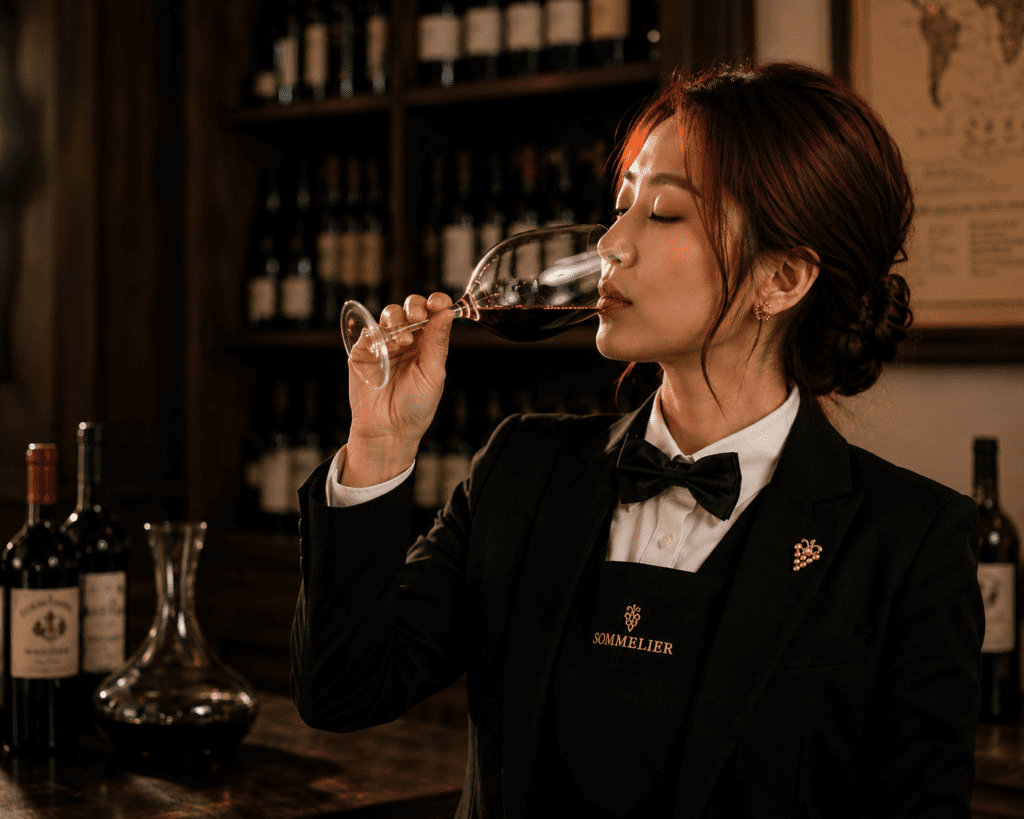
Now you drink — but deliberately. Take a small sip, enough to coat your entire palate, and before swallowing, do something that will feel strange at first: draw a small amount of air in through your lips while the wine is in your mouth. This technique, called the “souffle” by French tasters, vaporises the wine and sends its aromatic compounds up through the retro-nasal passage to your olfactory bulb, intensifying everything you perceive. Professional sommeliers do this automatically.
Hold the wine in your mouth for five to ten seconds, moving it across every part of your tongue and palate. Evaluate the following six structural elements.
Sweetness
The first sensation your tongue registers. Is this wine dry (no perceptible sugar), off-dry (a hint of sweetness), medium, or sweet? Sweetness is felt on the tip of the tongue. Note: fruit flavours are not the same as sweetness. A wine can be bone dry but taste intensely fruity.
Acidity
Acidity is what makes your mouth water. It is the crisp, refreshing quality of a great Riesling or Sauvignon Blanc, and the structure that allows wine to pair with food. High acidity makes a wine feel lively and fresh. Low acidity makes it feel flat and heavy. To isolate acidity, pay attention to how much saliva your mouth produces after you swallow — the more saliva, the higher the acidity.
Tannin (Red wines only)
Tannin is the grippy, drying sensation that comes from grape skins, seeds, and stems, as well as from oak barrels. It is what you feel when a red wine seems to “dry out” your gums and the sides of your tongue. High tannin is characteristic of Cabernet Sauvignon, Nebbiolo, and Syrah. Low tannin is characteristic of Pinot Noir and Gamay. Tannin level indicates how well a wine will pair with food — high-tannin wines need rich, fatty food to soften the grip — and how long a wine will age.
Alcohol
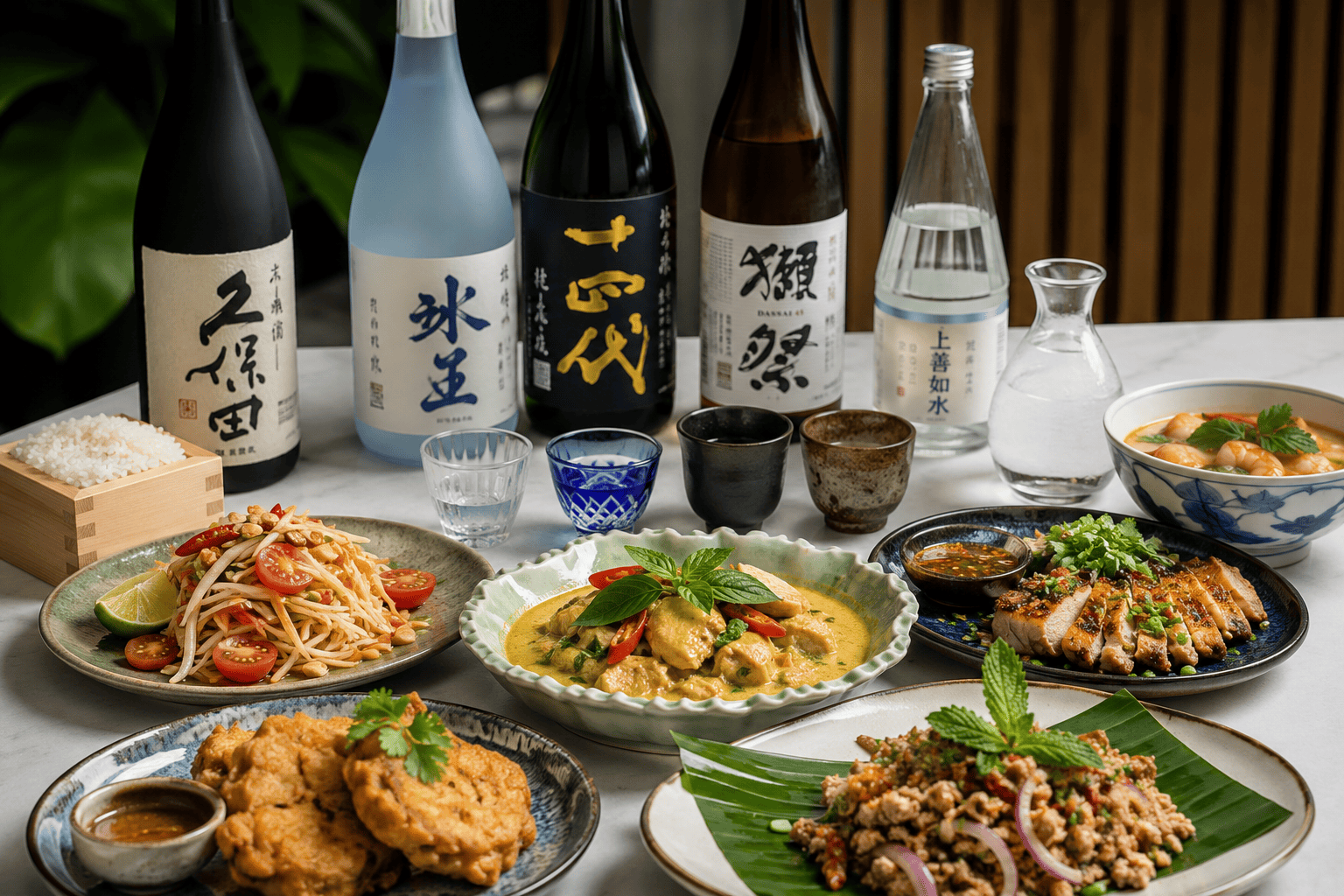
You feel alcohol as warmth, particularly at the back of your throat after swallowing. A wine that burns is high in alcohol. A wine that feels weightless is low in alcohol. Alcohol contributes to body and to the overall impression of richness. As noted in our Thai food pairing guide, alcohol level is also the most important structural factor when matching wine to spicy cuisine.
Body
Body is the overall weight and texture of the wine in your mouth — how light or full it feels. Think of the difference between skimmed milk, whole milk, and cream. A light-bodied wine feels thin and delicate. A full-bodied wine feels rich and substantial. Body is determined primarily by alcohol, sugar, and extraction (how much colour and flavour compounds were pulled from the grape skins).
Flavour Intensity and Character
Does the wine taste of the same things you smelled? Are the flavours intense or muted? Do they change as the wine sits on your palate — a phenomenon called “development” or “mid-palate evolution”? A complex wine reveals different things at different moments: the initial attack, the mid-palate, and the finish.
What Step 4 tells you: Sweetness level, acidity, tannin structure, alcohol, body, flavour complexity, and quality potential.
Swallow the wine — or, in a professional tasting with many wines, spit it into a spittoon — and pay careful attention to what happens next.
The Finish
The finish, also called the “length” or “aftertaste,” is how long the flavours persist in your mouth after you swallow. This is one of the most reliable single indicators of wine quality.
A short finish disappears within a few seconds. A medium finish lasts 10–20 seconds. A long finish can last 30, 60, or even over 90 seconds in the world’s greatest wines. When you taste a truly exceptional Burgundy, Barolo, or aged Riesling, the flavours simply do not stop — they evolve and deepen for well over a minute.
Measure the finish in your head by counting seconds. With practice, you will begin to feel the difference between wines that cost 300 baht and wines that cost 3,000 baht — often, finish length is the clearest expression of that difference.
Balance
After the finish, ask yourself: does everything add up? A well-balanced wine is one where no single element overwhelms the others. The acidity, tannin, alcohol, fruit, and oak all exist in harmony. A wine where one element sticks out — too much alcohol burning, too much oak dominating, too much acidity making your face pucker — is out of balance, regardless of its price.
Overall Quality Assessment
Finally, form a global impression. Is this wine simple or complex? Youthful or developed? Would it benefit from more time in a cellar, or is it at its peak now? Would you buy it again?
Professional sommeliers express this assessment using a numerical score (typically out of 100) or a qualitative descriptor. You do not need to use either — but developing the habit of forming a deliberate, conscious conclusion about every wine you taste will accelerate your development faster than anything else.
What Step 5 tells you: Quality level, ageing potential, balance, and overall verdict.
At Wine & Spirit Academy Bangkok, we provide that education at every level, from a single beginner tasting session to a full FSS Sommelier certification.
Our Beginner Wine Classes use the 5-step method as the foundation of every session, building your palate and Our FSS Sommelier Programme takes this foundation and builds sommelier skills, including a complete professional tasting vocabulary, regional knowledge, and assessment methodology — the same framework used by working sommeliers in Bangkok’s finest hotels and restaurants. regional knowledge, and assessment methodology — the same framework used by working sommeliers in Bangkok’s finest hotels and restaurants.
Our Private Masterclasses bring the same approach to corporate groups, private clients, and team events, where the 5-step method becomes an interactive shared experience.
→ Browse All Wine Classes https://wsa-bangkok.com/services/wine-classes/
→ FSS Sommelier Programme https://wsa-bangkok.com/services/fss-sommelier-classes/
→ Contact Us (link to /contact/) https://wsa-bangkok.com/contact/

How long does it take to develop a good wine palate?
Do I need expensive wine to practise tasting?
No. Some of the best learning wines are modestly priced. A good Mosel Riesling, a village Burgundy, or a New Zealand Sauvignon Blanc will teach you more about structure and typicity than an expensive prestige wine. The 5-step method works on every wine equally — and some of the most instructive tastings involve wines from across the full price spectrum side by side.
Is spitting wine really necessary when tasting?
In a professional setting where you are evaluating many wines in sequence, yes — spitting preserves your palate’s accuracy and prevents alcohol from clouding your judgement. For casual learning at home with one or two wines, spitting is optional. At WSA, we provide spittoons in our tasting sessions and encourage their use during longer classes, but we do not require it for introductory sessions.
What is the difference between aroma and bouquet?
Aroma refers to the primary scents that come from the grape itself — the fruit, floral, and varietal characters that are intrinsic to the grape variety. Bouquet refers to the secondary and tertiary scents that develop through winemaking (fermentation, oak ageing) and bottle ageing (the complex, evolved notes of leather, tobacco, dried fruit, and earth that develop in older wines). Both are assessed in Step 3 of the tasting process.
Why do some wines smell of petrol or rubber? Is that a fault?
Not always. In aged Riesling, a petrol or kerosene note — caused by a compound called TDN — is considered a signature of quality and development. It is sought after by enthusiasts and is an entirely deliberate result of the ageing process. The key distinction is context: petrol in an aged Riesling is a trophy; a rubbery smell in a young white wine may indicate reduction, which is a winemaking issue though often solvable with aeration.
Can I learn wine tasting online, or do I need to be in a classroom?
While wine education content online (including this guide) can build your theoretical knowledge, the actual development of your palate requires physical tasting — smelling real wine, experiencing real textures, and comparing real flavours. No video can teach you what a mineral Chablis smells like versus a buttery Napa Chardonnay. In-person guided tasting with an expert is irreplaceable. This is precisely why WSA’s courses are structured around hands-on tasting rather than theory alone.
Article by Anthony Caradec, Founder of Wine & Spirit Academy Bangkok — certified wine and spirits professional with over 18 years of experience across Europe and Southeast Asia.
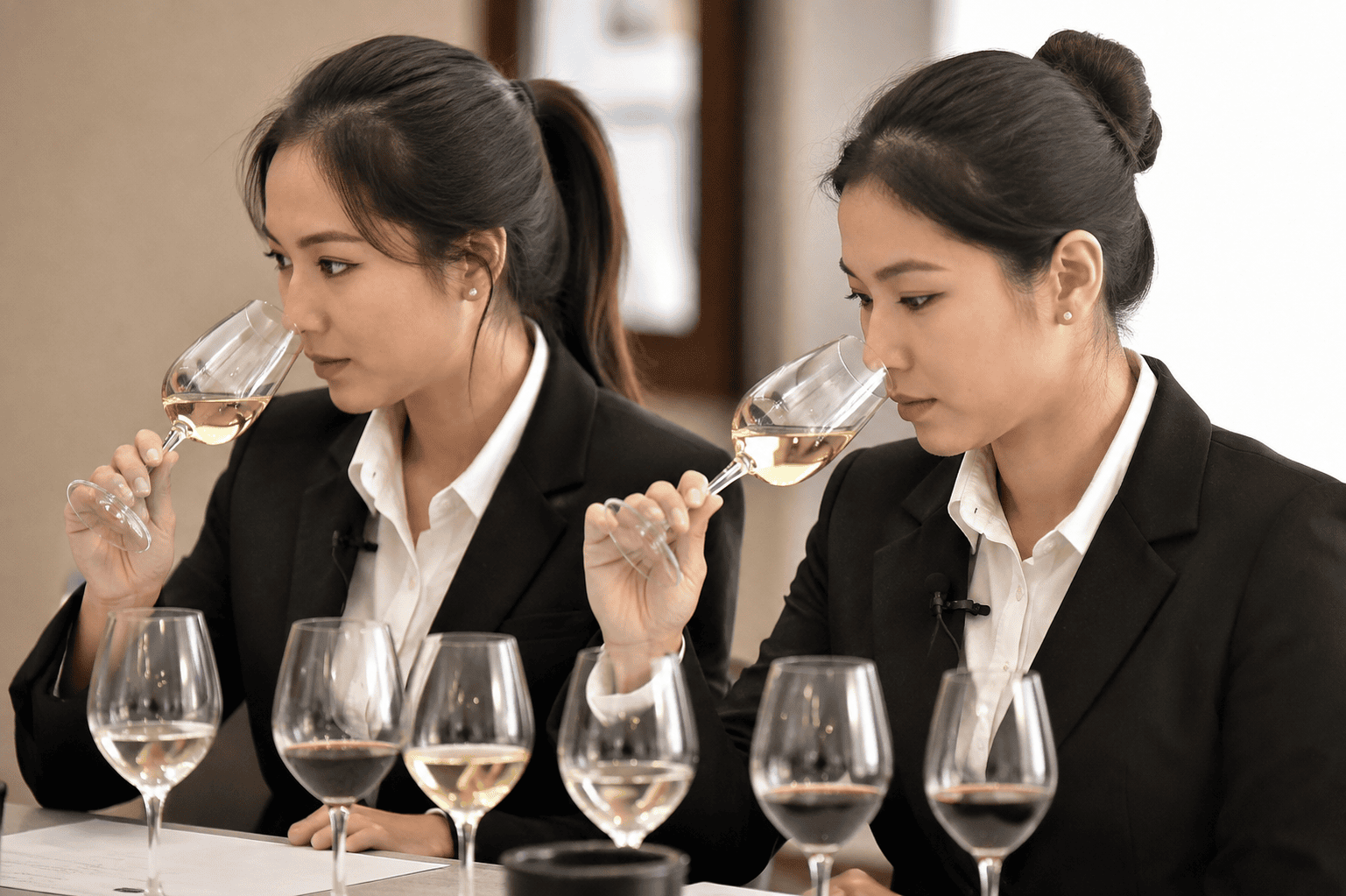
The most complete certified wine program in Bangkok is the
By Wine & Spirit Academy (WSA Bangkok) The short answer:

Short answer: WSET is the global reference for structured wine