By Wine & Spirit Academy (WSA Bangkok)
The short answer: a good sake class teaches you seven practical skills — how sake is made, how to read a label, how to taste with a method, how to tell the styles apart, how to serve at the right temperature, how to pair with food, and how to recommend a bottle with confidence. At WSA Bangkok you can learn them in 2 hours, in 1 day or over 3 days, depending on how far you want to go.
Most people order sake the same way every time: whatever the menu suggests, served whatever way the restaurant chooses. That works until you want to understand why one bottle costs ฿900 and another ฿9,000, why the same sake tastes different warm, or what to say when a guest asks for “something dry”.
This guide is not a list of sake types. It explains what you actually walk out of a sake class knowing, what that knowledge changes for you, and how to pick the right level among the three programs taught by WSA’s lead instructor, Anthony Caradec, a sake consultant with more than 18 years of experience.
You can read about sake for months and still not recognise a Ginjo in the glass. Sake is learned by comparison, and comparison needs several bottles open at once, at controlled temperatures, with someone explaining what you are tasting.
A structured class gives you four things self-study rarely does:
Bangkok adds a fifth reason. The city’s Japanese dining scene is large and still growing, and Thai food happens to be one of sake’s most surprising partners. What you learn in class you can use at dinner the same week.
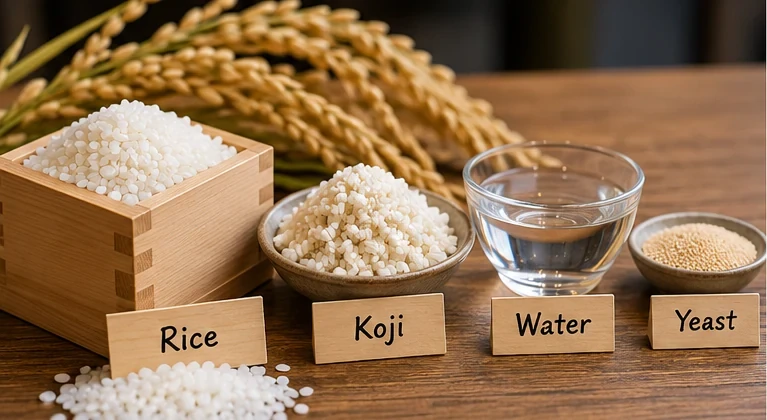
Every WSA sake program is built around the same seven skills. What changes from one level to the next is depth, the number of sakes tasted and whether you are examined.
At advanced level two more skills are added: identifying common faults, and understanding the commercial and trading side of the sake industry.
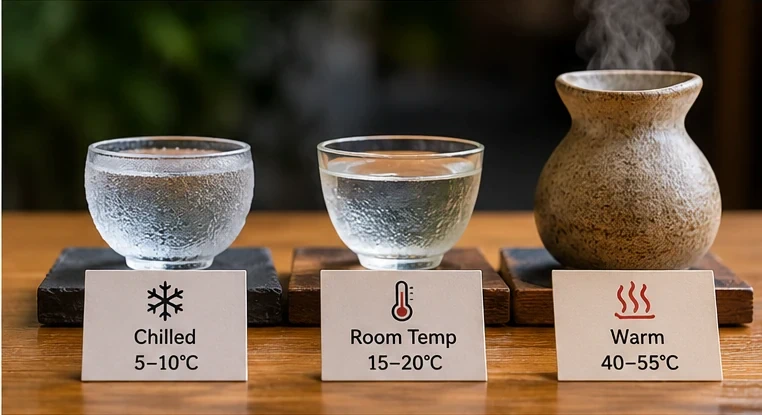
The same knowledge pays off differently depending on why you learn. Here is what changes after the class for the four profiles we teach most often.
| Your profile | What changes after the class | Recommended starting point |
|---|---|---|
| Curious food lover | You order with intent, choose bottles for dinner without guessing, and enjoy omakase and Thai meals more | Fundamentals of Sake Knowledge |
| Restaurant, bar or hotel staff | You explain the sake list, upsell with honest recommendations and serve each style at the right temperature | Sake Studies Basic |
| Sommelier or wine professional | You add a second beverage category to your CV and to your floor skills | Sake Studies Basic, then Advanced |
| Importer, distributor or sake entrepreneur | You assess quality, understand pricing and grades, and speak the producers’ language | Sake Studies Advanced |
Beyond the job benefits, the most common outcome reported by our students is simpler: confidence. One Fundamentals student summed it up after learning the difference between kimoto and yamahai — they could now explain sake properly to guests.
For hotel and restaurant teams who prefer to train on site, see our wine & sake training for hotels and restaurants.
WSA’s sake curriculum is a progressive path: Fundamentals, then Basic, then Advanced. Each level ends with a Wine & Spirit Academy certificate of completion.
An evening introduction (7:00–9:00 pm) for beginners and curious food lovers. You taste 4 sakes and leave with the essentials:
No prerequisites. See dates for Fundamentals of Sake Knowledge.
A full day (9:00 am–5:00 pm), basic to intermediate level, taught in English and Thai. You taste 10 sakes and build a working foundation you can use behind a bar or at your own table:
No prerequisites. See dates for Sake Studies Basic.
An intensive, intermediate-to-advanced program for serious enthusiasts and people building a career or business in sake. You taste 24 sakes and are formally assessed.
What goes deeper than Basic:
Assessment: a written exam (60% of the grade: 50 multiple-choice and 5 open questions) and a tasting evaluation (40%). A score of 60% passes; 90% and above earns Excellent.
Prerequisite: basic sake knowledge or the Fundamentals class. See dates for Sake Studies Advanced.
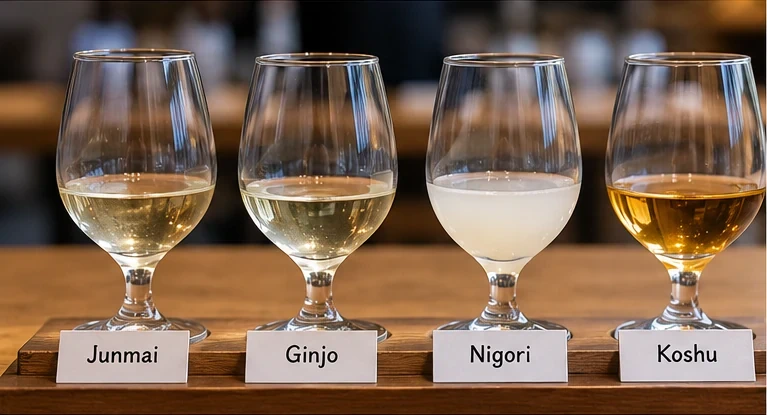
Most beginners should start with Fundamentals; hospitality staff get the best return from Basic; anyone who wants to be assessed or work with sake commercially should aim for Advanced.
| Fundamentals of Sake Knowledge | Sake Studies Basic | Sake Studies Advanced | |
|---|---|---|---|
| Duration | 2 hours (evening) | 1 day (7 hours) | 3 days (21 hours) |
| Price | ฿3,500 | ฿8,500 | ฿24,000 |
| Sakes tasted | 4 | 10 | 24 |
| Level | Basic | Basic to intermediate | Intermediate to advanced |
| Prerequisite | None | None | Basic knowledge or Fundamentals |
| Exam | No | No | Written (60%) + tasting (40%) |
| Label reading | Main terms | Full label decoding | Including kanji |
| Food pairing | Introduction with pairing | Principles with pairing | Complex pairing |
| Industry & trade | — | — | Yes |
| Certificate | WSA completion | WSA completion | WSA completion, after passing the exam |
| Best for | Beginners, gifts, a first taste | Hospitality staff, serious enthusiasts | Professionals and sake entrepreneurs |
Choose Fundamentals if you have never studied sake and want to know whether you enjoy it before investing a full day.
Choose Basic if you serve sake at work, or you already like sake and want to understand what you drink. It is the most complete single-day option.
Choose Advanced if you want a graded assessment, plan to import, sell or buy sake, or need to taste and describe professionally. A natural path is Basic first, then Advanced.
A sake tasting is entertainment, a sake class is education, and an international certification is a credential. They answer different needs, and many people end up doing more than one.
| Bar or restaurant sake tasting | WSA sake class | International certification (e.g. WSET Award in Sake, SSI Kikisake-shi) | |
|---|---|---|---|
| Main goal | Enjoy a few sakes | Understand, taste and serve sake | Earn a globally recognised qualification |
| Structure | Informal, varies by venue | Progressive 3-level path | Fixed international syllabus |
| Tasting method taught | Rarely | Yes, at every level | Yes, the body’s own method |
| Assessment | None | Exam at Advanced level | Formal exam (WSET Level 1: 30 multiple-choice questions, 70% to pass) |
| Local context | Depends on venue | Thai and international food pairing, Bangkok market | Global, not market-specific |
| Hands-on service skills | No | Yes: storage, glassware, temperature, recommendation | Covered in the syllabus; practice varies by provider |
| Language | Varies | English and Thai | Depends on the provider |
If your employer or a job listing asks for a specific international credential, you will need that body’s exam. If your goal is to taste, serve and sell sake well in Bangkok, a practical class built around local food and local guests is usually the faster route — and it is excellent preparation for an international exam later.
Comparing wine certifications instead? Read WSET vs CMS vs FSS: which sommelier certification to choose in Bangkok.
Classes take place at the École Ducasse Nai Lert Bangkok Studio, in Nai Lert Park (Lumphini, Pathum Wan), in small groups led by Anthony Caradec.
Each session alternates short theory blocks with tasting, so every concept is tied to a glass in front of you:
Students consistently mention the same moments in their reviews: the explanation of kimoto vs yamahai in Fundamentals, the regional and water-quality differences in Basic, and the blind tasting in Advanced, described as challenging but very valuable.
You learn how sake is made, how to read its label, how to taste with a structured method, how to recognise the main styles, how to serve it at the right temperature and how to pair it with food. Advanced classes add fault detection, label kanji and the business side of sake.
Yes, if you drink, serve or buy sake regularly. A class shortens years of trial and error: you stop paying for bottles you do not enjoy, and hospitality staff can recommend and sell sake with confidence. For a low-commitment start, the 2-hour Fundamentals class costs ฿3,500.
No. Fundamentals of Sake Knowledge and Sake Studies Basic have no prerequisites. Sake Studies Advanced asks for basic sake knowledge or completion of the Fundamentals class.
Yes. Every WSA sake program ends with a Wine & Spirit Academy certificate of completion. For Sake Studies Advanced, the certificate is awarded after passing the written and tasting exam.
A tasting lets you enjoy a few sakes; a class teaches you why they taste the way they do and how to choose, serve and pair them yourself. Classes include a tasting method and structured theory, which a tasting rarely does.
Sake Studies Basic is taught in English and Thai. Contact WSA to confirm the language of a specific session.
4 in Fundamentals, 10 in Sake Studies Basic and 24 in Sake Studies Advanced.
Yes. WSA offers on-site HORECA training for hospitality teams and private sake tastings for corporate events. See HORECA training programs and the corporate wine & sake tasting guide.
You do not need to know anything about sake to begin — only the curiosity to taste with attention. Start with the 2-hour Fundamentals class, build a full foundation in one day with Sake Studies Basic, or commit to three days of Sake Studies Advanced for a graded, professional level.
→ Compare dates and book on our sake classes in Bangkok page.
Questions about which level suits you? Call 099-016-8838 (Mon–Fri, 9:00 am–8:00 pm), write to wsafbscorporate@gmail.com, or message us on LINE.
Not ready to book yet? Read our beginner’s guide to sake types and flavours first.

By Wine & Spirit Academy (WSA Bangkok) The short answer:
By Wine & Spirit Academy (WSA Bangkok) The short answer: