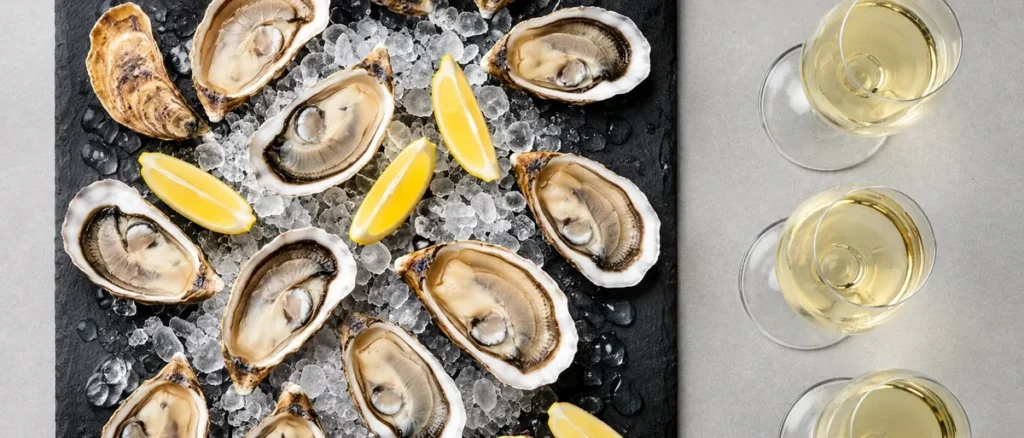
If you have ever said “I like white wine, but not that one”, you already know the grape matters. A steely Chablis, a passion-fruit Marlborough Sauvignon Blanc and a buttery Napa Chardonnay are all “white wine”, yet they taste like three different drinks.
The good news: most white wines fall into three easy styles. Learn which one you enjoy, and you can order confidently from any wine list in Bangkok.
Below, we look at eight grapes one by one: where they grow, how they are made, and what ends up in your glass. If you prefer red, read our guide to Cabernet Sauvignon vs Merlot vs Pinot Noir.
| Grape | Style | Acidity | Body | Oak / MLF | Key regions | Typical aromas |
|---|---|---|---|---|---|---|
| Chardonnay | Crisp to rich | Medium to high | Light to full | Both, depending on the winemaker | Burgundy (France), California, Australia | Lemon, apple, butter, toast, hazelnut |
| Sauvignon Blanc | Aromatic, crisp | High | Light to medium | Rarely | Loire (France), Marlborough (NZ), Bordeaux | Grapefruit, lime, passion fruit, cut grass, flint |
| Pinot Grigio / Pinot Gris | Crisp (Italy) or rich (Alsace) | Medium to high | Light to full | Rarely | Veneto & Friuli (Italy), Alsace (France), Oregon | Lemon, pear, almond; honey and smoke in Alsace |
| Grüner Veltliner | Crisp, peppery | High | Light to full | Rarely | Wachau, Kamptal, Weinviertel (Austria) | Lime, green apple, white pepper, green bean |
| Riesling | Aromatic, dry to sweet | Very high | Light to medium | Never oaked; no MLF | Mosel & Rheingau (Germany), Alsace, Clare Valley (Australia) | Lime, green apple, peach, slate; petrol |
| Albariño | Crisp, saline | High | Light to medium | No oak, lees ageing | Rías Baixas (Spain), Vinho Verde (Portugal) | Peach, lemon, apricot, sea spray, passion fruit |
| Torrontés | Very aromatic | Medium | Medium | No | Salta & Cafayate (Argentina) | Rose, litchi, jasmine, peach, orange blossom |
| Chenin Blanc | Crisp to rich, dry to sweet | Very high | Light to full | Sometimes | Loire (France), Stellenbosch & Swartland (South Africa) | Green apple, quince, honey, beeswax |
Tip: when a wine list says only “white Burgundy”, “Sancerre” or “Rías Baixas”, the region tells you the grape. This table is your translator.
Chardonnay is the world’s most famous white grape, and the most flexible. On its own it is fairly neutral, so the place and the winemaker shape the style: it can be lean and mineral or creamy and toasty.
| Where | Style | Oak / MLF | What you taste |
|---|---|---|---|
| Chablis, Burgundy (France) | Crisp, mineral | Usually no new oak; MLF common but subtle | Lemon, green apple, oyster shell |
| Côte de Beaune, Burgundy (Meursault, Puligny-Montrachet) | Elegant, rich | Oak barrels and full MLF | Hazelnut, brioche, ripe lemon, long finish |
| Mâconnais, Burgundy | Fresh, fruity | Mostly steel tanks | Yellow apple, melon, white flowers |
| Napa & Sonoma (California) | Rich, round | New oak and full MLF | Ripe pineapple, butter, vanilla, toast |
| Margaret River & Adelaide Hills (Australia) | Modern, balanced | Some oak, less butter than before | Grapefruit, white peach, cashew |
Style keywords: from crisp and unoaked to full-bodied and buttery. If you see “buttery”, it comes from MLF; “vanilla” and “toast” come from oak.
Ageing: simple unoaked styles are best within 2–3 years. Premier and Grand Cru white Burgundy can age 8–15 years, developing notes of honey, mushroom and roasted nuts.
You’ll like it if: you enjoy creamy textures (oaked) or clean, mineral whites (Chablis).
Learn it at WSA: taste Chablis and Côte de Beaune side by side in our French Premium Class: Burgundy. Chardonnay is also the grape of Blanc de Blancs Champagne, explained in Champagne vs Prosecco vs Cava.
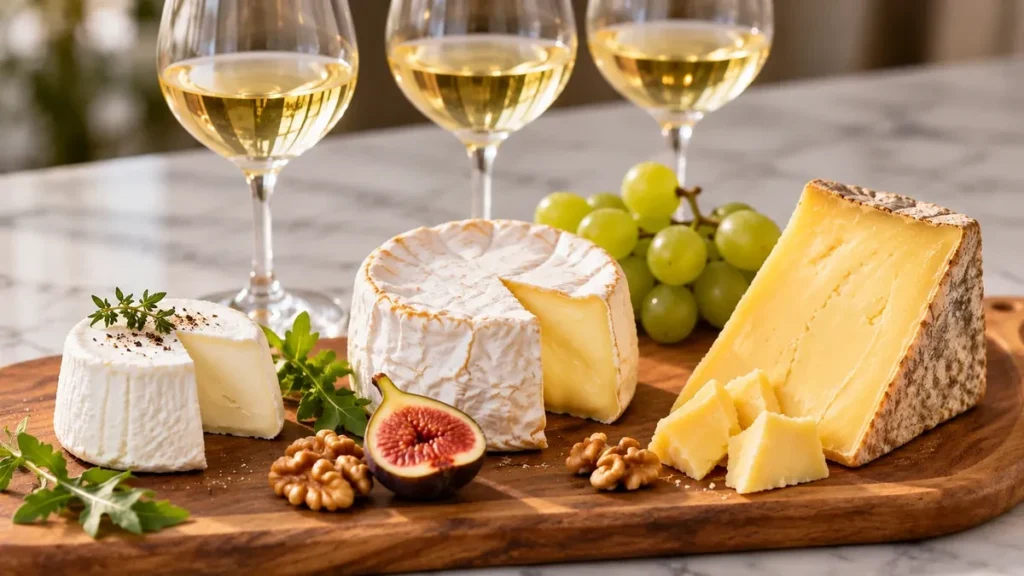
Sauvignon Blanc is the easiest white grape to recognise blind: high acidity and a green, zesty perfume of grapefruit, gooseberry and freshly cut grass. Those “green” notes come from natural compounds in the grape called pyrazines.
| Where | Style | Oak / MLF | What you taste |
|---|---|---|---|
| Sancerre & Pouilly-Fumé, Loire (France) | Crisp, mineral, restrained | Usually steel; no MLF | Lemon, gooseberry, flint, chalk |
| Marlborough (New Zealand) | Intense, tropical | Steel; no MLF | Passion fruit, grapefruit, cut grass, jalapeño |
| Bordeaux & Pessac-Léognan (France) | Rounder, blended with Sémillon | Often oak-aged in Pessac-Léognan | Lemon, beeswax, toast |
| Casablanca & Leyda (Chile) | Fresh, good value | Steel | Lime, green pepper, herbs |
| South Africa (Elgin, Durbanville) | Between Loire and New Zealand | Mostly steel | Grapefruit, fig leaf, flint |
Style keywords: crisp, high acidity, aromatic, usually unoaked, no MLF to keep it fresh.
Ageing: drink young, within 1–3 years. Oaked Bordeaux blends and top Sancerre can last 5–10 years.
You’ll like it if: you love lime, fresh herbs and a mouth-watering finish.
Learn it at WSA: taste Sancerre and Pouilly-Fumé at their source in the French Premium Class: Loire Valley, or recognise it blind in FSS Basic.
Pinot Grigio (Italian) and Pinot Gris (French) are the same grape, a pink-skinned mutation of Pinot Noir. The name on the label usually tells you the style: “Grigio” means light and crisp, “Gris” means richer and spicier.
| Where | Style | Oak / MLF | What you taste |
|---|---|---|---|
| Veneto & Delle Venezie (Italy) | Light, neutral, easy-drinking | Steel; no MLF | Lemon, green apple, almond |
| Friuli & Alto Adige (Italy) | Crisper, more mineral, more character | Mostly steel, some lees ageing | Pear, white flowers, wet stone |
| Alsace (France) | Full-bodied, oily, often off-dry | Large old casks | Ripe pear, honey, ginger, smoke |
| Willamette Valley (Oregon, USA) | Medium-bodied, fruity | Mostly steel | Pear, melon, citrus |
Style keywords: crisp and light (Grigio) or rich and textured (Gris). Most styles avoid MLF to keep freshness.
Ageing: Italian Pinot Grigio within 1–2 years. Alsace Pinot Gris, especially Grand Cru, can age 10 years and more.
You’ll like it if: you want an easy, refreshing aperitif (Grigio) or a white that stands up to richer, spicier dishes (Gris).
Learn it at WSA: explore Italy’s key regions and grapes in our Italian Premium Masterclass. For Alsace Grand Cru, see Grand Cru vs Premier Cru.
Grüner Veltliner is Austria’s signature grape, covering about a third of the country’s vineyards. Its calling card is a twist of white pepper on top of fresh citrus, with high acidity that makes it one of the most food-friendly whites in the world.
| Where | Style | Oak / MLF | What you taste |
|---|---|---|---|
| Weinviertel DAC | Light, zesty, peppery | Steel; no MLF | Lime, green apple, white pepper |
| Kamptal & Kremstal | Medium-bodied, mineral | Mostly steel, some large old casks | Citrus, white pepper, lentil, stone |
| Wachau: Federspiel | Medium-bodied, dry, elegant (max. 12.5% alcohol) | Steel or large old casks | Lemon, pear, pepper |
| Wachau: Smaragd | Full-bodied, rich, from the ripest grapes (min. 12.5% alcohol) | Steel or large old casks | Ripe peach, honey, spice, smoky minerality |
Style keywords: crisp, high acidity, peppery, usually unoaked. Lighter styles are like a Sauvignon Blanc without the tropical fruit; Smaragd styles can rival white Burgundy.
Ageing: light styles within 2–3 years. Top Smaragd and single-vineyard (“Ried”) wines can age 10–20 years.
You’ll like it if: you like Sauvignon Blanc or Pinot Grigio and want something more savoury.
Learn it at WSA: Grüner is a classic blind-tasting grape. Learn to spot its pepper and acidity in FSS Intermediate.
Many sommeliers call Riesling the greatest white grape in the world. It has piercing acidity, pure aromas of lime, peach and flowers, and it shows its terroir like no other white. It is never oaked, and it can be bone-dry or richly sweet, so the label matters.
| Where | Style | Oak / MLF | What you taste |
|---|---|---|---|
| Mosel (Germany) | Light, delicate, often off-dry; low alcohol (often 8–10%) | Steel or large old casks; no MLF | Green apple, lime, white peach, slate |
| Rheingau & Pfalz (Germany) | Fuller; many dry “Trocken” wines | Steel or large old casks | Peach, apricot, citrus, spice |
| Alsace (France) | Dry, powerful, mineral | Large old casks | Lime, white flowers, stone; Grand Cru for ageing |
| Wachau & Kamptal (Austria) | Dry, concentrated | Steel | Apricot, citrus, minerals |
| Clare & Eden Valley (Australia) | Bone-dry, very crisp | Steel | Lime, lime cordial, toast with age |
Reading a German label: Kabinett (lightest, often off-dry), Spätlese (riper), Auslese (richer, often sweet), then the dessert wines Beerenauslese, Trockenbeerenauslese and Eiswein. “Trocken” means dry.
Style keywords: aromatic, very high acidity, light to medium body, unoaked, no MLF. The sweetness ranges from none to luscious, always balanced by acidity.
Ageing: one of the longest-lived whites. Good Riesling ages 10–30 years; sweet Auslese and above can last 50. With age it develops honey, toast and a typical “petrol” note.
You’ll like it if: you love lime and green apple, or want a white with a touch of sweetness to match spicy food.
Learn it at WSA: Riesling is a must-know grape for any blind tasting. Learn to recognise it in FSS Basic or FSS Advanced . For Alsace Grand Cru Riesling, see Grand Cru vs Premier Cru.
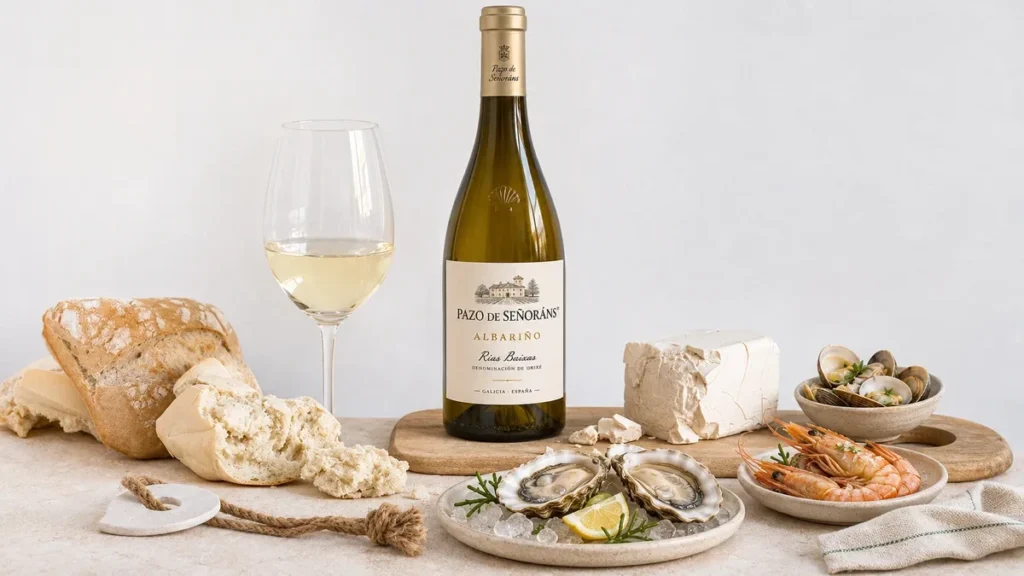
Albariño comes from Galicia, in the rainy, green north-west corner of Spain, where vines grow close to the Atlantic. The result is a crisp, fragrant white with a salty, sea-breeze finish that makes it a natural match for seafood.
| Where | Style | Oak / MLF | What you taste |
|---|---|---|---|
| Rías Baixas: Val do Salnés (Spain) | Crisp, saline, most classic | Steel, often several months on lees; no MLF | Lemon, white peach, sea spray |
| Rías Baixas: Condado do Tea & O Rosal (Spain) | Slightly riper and rounder, sometimes blended | Steel, lees ageing | Apricot, orange blossom, citrus |
| Vinho Verde: Monção e Melgaço (Portugal), as “Alvarinho” | Fresh, more structured than basic Vinho Verde | Steel | Grapefruit, peach, minerals |
Style keywords: crisp, high acidity, saline, medium-bodied, unoaked. Lees ageing (contact with the dead yeast) adds a soft, creamy texture without losing freshness.
Ageing: best within 1–3 years. Top lees-aged bottles can develop for 5–8 years.
You’ll like it if: you love seafood, lemon and a refreshing, salty finish.
Learn it at WSA: explore Spain’s wine regions and native grapes in our Spanish Premium Masterclass or FSS Advanced.
Torrontés (more precisely Torrontés Riojano) is Argentina’s own white grape, a natural cross of Muscat of Alexandria and a local grape. Its nose is pure perfume: roses, jasmine and peach. Yet most versions are fully dry, which surprises many first-time drinkers.
| Where | Style | Oak / MLF | What you taste |
|---|---|---|---|
| Cafayate & Calchaquí Valleys, Salta | The benchmark: intense, fresh | Steel; no MLF | Rose, jasmine, peach, lemon zest |
| La Rioja (Argentina) | Riper, rounder | Steel | Ripe peach, orange blossom |
| Mendoza | Lighter, simpler | Steel | Citrus, white flowers |
Why Salta? Its vineyards are among the highest in the world, from about 1,700 to over 3,000 m above sea level. Strong sun builds aroma, while very cold nights keep the wine fresh.
Style keywords: very aromatic, dry, medium acidity, medium-bodied, unoaked. A light bitter note on the finish is typical.
Ageing: drink young, within 1–2 years, while the perfume is at its peak.
You’ll like it if: you enjoy floral, fragrant wines such as Muscat or Gewürztraminer but want them dry.
Learn it at WSA: learn to tell aromatic grapes like Torrontés from neutral ones in FSS Basic.
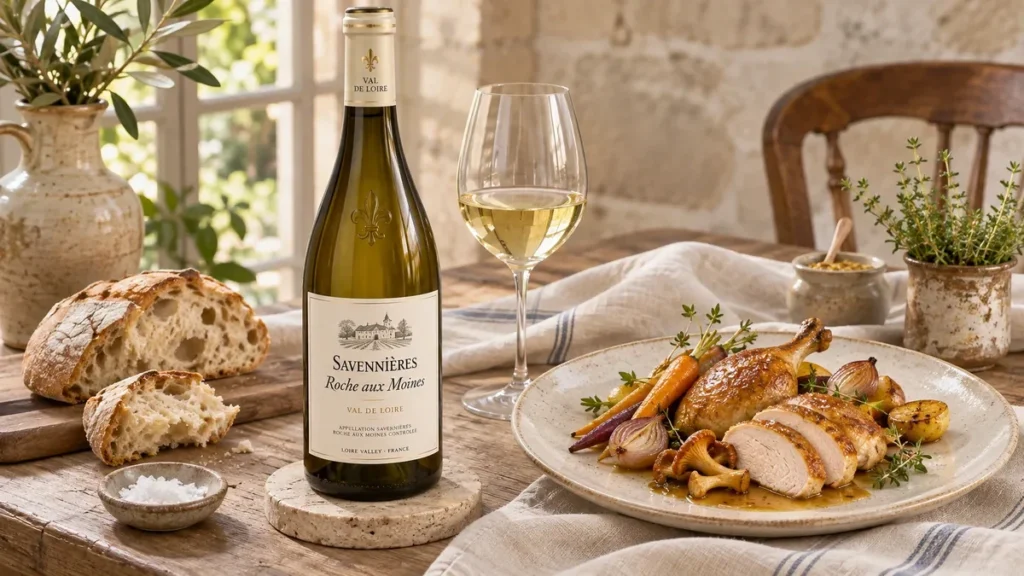
Chenin Blanc may be the most versatile white grape of all. Thanks to its very high natural acidity, it makes dry, off-dry, sweet and sparkling wines, and the best of them can age for decades.
| Where | Style | Oak / MLF | What you taste |
|---|---|---|---|
| Vouvray, Loire (France) | Dry (sec), off-dry (demi-sec), sweet (moelleux) or sparkling | Steel or old oak; usually no MLF | Green apple, quince, chamomile, honey |
| Savennières, Loire | Dry, intense, mineral | Often old oak | Quince, wet stone, beeswax |
| Coteaux du Layon & Quarts de Chaume, Loire | Sweet, from noble rot (botrytis) | Old oak | Apricot, honey, marmalade |
| Stellenbosch & Swartland (South Africa) | Dry; fresh and fruity or rich and oaked | Steel, or barrels for top old-vine wines | Yellow apple, pineapple, honey, toast |
South Africa is now the world’s largest producer of Chenin Blanc, often from old vines; it is the country’s most planted grape.
Style keywords: very high acidity, from crisp and dry to rich and sweet. Check the label: “sec” means dry, “demi-sec” off-dry, “moelleux” sweet.
Ageing: simple styles within 2–4 years. Top dry Savennières or Vouvray last 10–20 years; sweet Quarts de Chaume can age 30 years and more, developing honey, lanolin and dried fruit.
You’ll like it if: you like apple-crisp whites with more texture, or want a sweet wine that never feels heavy.
Learn it at WSA: discover the dry and sweet faces of Chenin Blanc at their home in the French Premium Class: Loire Valley or FSS Intermediate
Start from what you already enjoy, and pick the matching grape.
| If you like… | Try | Example to order |
|---|---|---|
| Something light and easy | Pinot Grigio | Pinot Grigio from Alto Adige |
| Lime, herbs and a zesty finish | Sauvignon Blanc | Sancerre or Marlborough Sauvignon Blanc |
| Seafood and a salty, fresh finish | Albariño | Rías Baixas Albariño |
| Crisp but more savoury and peppery | Grüner Veltliner | Kamptal or Wachau Federspiel |
| Pure lime and razor-sharp freshness | Dry Riesling | Clare Valley or Alsace Riesling |
| Light, low alcohol, a hint of sweetness | Off-dry Riesling | Mosel Riesling Kabinett |
| Flowers and perfume, but dry | Torrontés | Torrontés from Cafayate, Salta |
| Creamy, round and toasty | Oaked Chardonnay | Meursault or Napa Chardonnay |
| Mineral, clean, no oak | Unoaked Chardonnay | Chablis |
| A touch of sweetness with more body | Chenin Blanc | Vouvray demi-sec |
Thai cooking balances sour, sweet, salty and spicy, and white wine often works better than red with it. A few simple rules: high acidity matches lime and tamarind, a touch of sweetness calms chilli heat, and heavy oak clashes with spice.
| Thai dish | Best white | Why it works |
|---|---|---|
| Som tam (green papaya salad) | Sauvignon Blanc | Acidity and herbal notes match lime and fresh herbs |
| Grilled prawns, pla pao (salt-crusted fish) | Albariño | Saline freshness loves seafood |
| Larb, yum salads | Grüner Veltliner | Pepper and acidity handle herbs, lime and spice |
| Spring rolls, chicken satay | Pinot Grigio | Light and neutral, does not overpower |
| Pad thai, pad kra pao | Off-dry Riesling (Kabinett) | Sweetness and low alcohol cool the chilli; acidity matches tamarind and lime |
| Tom kha gai (coconut chicken soup) | Lightly oaked Chardonnay | Creamy texture matches coconut milk |
| Red curry, jungle curry | Off-dry Chenin Blanc, Riesling Spätlese or Alsace Pinot Gris | A little sweetness tames the chilli |
| Green curry with Thai basil | Torrontés | Floral aromas echo basil and lemongrass |
Want to master pairing at your own table? Our Wine Etiquette & Pairings class covers it in 2 hours.
Reading about grapes helps, but tasting them side by side is how you really learn your style. Wine & Spirit Academy Bangkok was founded by a French sommelier and offers three ways to go further.
Foundation of Sommelier Skills: Basic (1 day, ฿8,500) teaches you how to taste like a professional: acidity, body, aromas, oak and MLF, the very words used in this article. You learn the main grape varieties and how to recognise them, and it is the first step of the FSS sommelier program.
3-hour masterclasses with guided tasting and expert explanations.
| Class | Price | White grapes from this article |
|---|---|---|
| French Premium: Burgundy | ฿5,500 | Chardonnay (Chablis, Côte de Beaune, Mâconnais) |
| French Premium: Loire Valley | ฿5,500 | Sauvignon Blanc, Chenin Blanc |
| Italian Premium Masterclass | ฿5,500 | Pinot Grigio and Italy’s native grapes |
| Spanish Premium Masterclass | ฿5,500 | Albariño and Spain’s native grapes |
Other French Premium Classes cover Bordeaux, Champagne and the Rhône Valley. All classes can be booked as a private masterclass for friends or colleagues.
Wine Etiquette & Pairings (2 hours, ฿3,500): how to serve, order and match wine with food, including Thai dishes.
Every year, WSA hosts exclusive masterclasses with winemakers from renowned estates; last year’s guest was Château Cheval Blanc. Dates are announced on Facebook, Instagram and LINE.
Most white wines fall into three styles: crisp and light (Pinot Grigio, Albariño, Grüner Veltliner), aromatic (Sauvignon Blanc, Riesling, Torrontés) and rich (oaked Chardonnay, some Chenin Blanc).
Pinot Grigio and Albariño are easy, fresh and food-friendly. If you like fruit and perfume, try a Marlborough Sauvignon Blanc or a Torrontés from Salta.
Most Sauvignon Blanc, Albariño, Grüner Veltliner, Chablis and Pinot Grigio are fully dry. Torrontés smells sweet but is usually dry too.
Malolactic fermentation (MLF) turns sharp malic acid into softer lactic acid and creates diacetyl, the compound that smells like butter. New oak barrels add vanilla and toast.
Yes, it is the same grape. “Pinot Grigio” usually signals a light Italian style, while “Pinot Gris” signals a richer style, as in Alsace or Oregon.
Lime, green apple and a typical note of white pepper, with high acidity. Smaragd wines from the Wachau are richer and riper.
From Rías Baixas in Galicia, Spain, especially the Val do Salnés subzone. In Portugal, it is called Alvarinho and is grown in Monção e Melgaço (Vinho Verde).
Salta’s vineyards sit between about 1,700 and 3,000 m altitude. Intense sun and cold nights give strong floral aromas with freshness.
Not always. Australian, Alsace and Austrian Riesling are usually dry, and German “Trocken” means dry. German Kabinett and Spätlese are often off-dry, while Auslese and above are sweet.
Both. Check the label: in Vouvray, “sec” is dry, “demi-sec” off-dry and “moelleux” sweet. Most South African Chenin Blanc is dry.
High-acid wines like Sauvignon Blanc, Albariño and Grüner Veltliner work with salads and seafood. For spicy dishes, an off-dry Riesling, Chenin Blanc or Alsace Pinot Gris calms the heat.
At WSA Bangkok: FSS Basic for tasting skills, then the French, Italian and Spanish Premium Classes to explore each country in depth.
Crisp, aromatic or rich: the only way to know your favourite white is to taste them side by side, with someone who can explain what you are tasting.
Questions? Call 099-016-8838 (Mon–Fri, 9:00–20:00) or message us on LINE.
Keep reading: Cabernet Sauvignon vs Merlot vs Pinot Noir · French Wine Regions Explained · Champagne vs Prosecco vs Cava
By Wine & Spirit Academy (WSA Bangkok) The short answer:
By Wine & Spirit Academy (WSA Bangkok) The short answer:
By Wine & Spirit Academy (WSA Bangkok) The short answer: