By Wine & Spirit Academy (WSA Bangkok)
The short answer: “Grand Cru” and “Premier Cru” do not mean the same thing everywhere in France. In Burgundy and Alsace, they rank a vineyard plot, and Grand Cru is the top. In Champagne, they rank a whole village, and Grand Cru is again the top. In Bordeaux, they rank a château (the estate, not the land), and the top level is called “Premier Cru” or “Premier Grand Cru Classé”. So a Bordeaux “Premier Cru” like Château Margaux sits at the summit, while a Burgundy “Premier Cru” sits one step below Grand Cru. Classified wines are usually better than their neighbours, but the producer and the vintage matter as much as the word on the label.
Open a fine-dining wine list in Bangkok and the words appear everywhere: 1er Cru, Grand Cru Classé, Premier Grand Cru Classé A, Grand Cru in small letters on a Champagne. They signal prestige, and they justify prices from a few thousand baht to several hundred thousand. Yet most people, including many hospitality professionals, cannot say what each one actually guarantees.
This guide explains, region by region, who decided each classification, what it ranks, how often it changes, how to recognise it on a label, and whether it really means a better wine. Along the way, you will meet the legendary names — Pétrus, Romanée-Conti, Château Margaux, Jacques Selosse — and understand exactly where they sit in the system, or why some of them sit outside it.
This article covers the rankings only. For the grapes, climate and style of each region, start with our companion guide, French Wine Regions Explained.
Cru comes from the French verb croître, to grow. A cru is literally “a growth”: a place, or an estate, recognised for producing better wine than its neighbours. France never created a single national ranking. Each region built its own, at a different time and for a different reason, which is why the same words can mean opposite things.
| Region | What is classified | Top level | Second level | Fixed or revised? |
|---|---|---|---|---|
| Bordeaux (Médoc, Sauternes) | The château (estate) | Premier Cru (First Growth) | Deuxième Cru (Second Growth) | Fixed since 1855, one change |
| Bordeaux (Saint-Émilion) | The château | Premier Grand Cru Classé A | Premier Grand Cru Classé B | Revised about every 10 years |
| Burgundy | The vineyard plot (climat) | Grand Cru | Premier Cru (1er Cru) | Fixed by appellation law |
| Champagne | The village | Grand Cru village | Premier Cru village | Historic village ranking, still used on labels |
| Alsace | The vineyard plot (lieu-dit) | Grand Cru | Premier Cru (in preparation) | Fixed by appellation law |
The key question to ask in front of any label is therefore not “is this a Grand Cru?” but “what exactly is being ranked here — the land, the village or the estate?” The answer changes how much the words are worth.
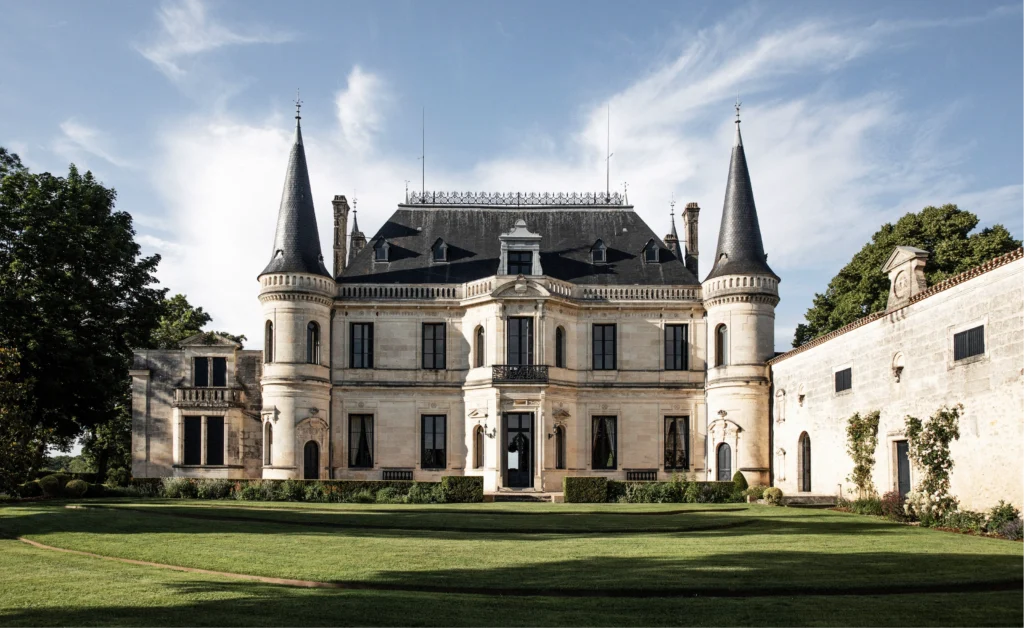
In Bordeaux the classification belongs to the estate and its brand. A château can buy or sell vineyard land and keep its rank. This is the opposite of Burgundy, and it explains much of the region’s logic.
For the Universal Exhibition in Paris in 1855, Emperor Napoleon III asked Bordeaux’s wine brokers to rank the region’s best wines. They did it the practical way: by the prices each château’s wine had fetched over the previous decades. The result ranked 61 red wines — all from the Médoc, plus Château Haut-Brion from Graves — into five tiers, the crus classés or “growths”:
| Tier | Number of châteaux | Examples |
|---|---|---|
| Premier Cru (First Growth) | 5 | Lafite Rothschild, Latour, Margaux, Haut-Brion, Mouton Rothschild |
| Deuxième Cru (Second Growth) | 14 | Léoville Las Cases, Pichon Baron, Cos d’Estournel |
| Troisième Cru (Third Growth) | 14 | Palmer, Giscours, Calon-Ségur |
| Quatrième Cru (Fourth Growth) | 10 | Talbot, Beychevelle, Duhart-Milon |
| Cinquième Cru (Fifth Growth) | 18 | Pontet-Canet, Lynch-Bages, Grand-Puy-Lacoste |
The list has changed only once in more than 170 years: in 1973, Château Mouton Rothschild was promoted from Second to First Growth. Because it is frozen, some Fifth Growths today sell for more than some Seconds — the ranking reflects the market of 1855, not of today.
The same 1855 classification also ranked the sweet wines of Sauternes and Barsac, with Château d’Yquem alone in a special category above all others: Premier Cru Supérieur.
On the label: “Grand Cru Classé en 1855” or “Premier Grand Cru Classé” appears under the château name, alongside the commune appellation (Pauillac, Margaux, Saint-Julien, Saint-Estèphe).
Saint-Émilion created its own classification in 1955, and unlike 1855 it is revised about every ten years, based on tasting, reputation and the estate’s terroir and practices. The 2022 edition has three levels:
The 2022 edition caused a storm: three historic “A” estates, Cheval Blanc, Ausone and Angélus, withdrew from the classification altogether, disagreeing with its criteria. They remain among the most sought-after wines in the world, simply without the official title — proof that a classification is only as strong as the estates that accept it.
The Saint-Émilion trap: Saint-Émilion Grand Cru (without “Classé”) is not a classification at all. It is an appellation with slightly stricter rules than plain Saint-Émilion, and hundreds of estates use it. Only the words “Grand Cru Classé” indicate a ranked château.
In 2026 Bordeaux also received a completely new kind of award, the MICHELIN Grappes, which rates estates rather than individual wines.
Taste it: the second wines of classified châteaux are the most affordable way into this world. Our shop carries Alter Ego de Palmer, Margaux 2013 from the Third Growth Château Palmer, Petit Cheval 2017 from Cheval Blanc, and the legendary Château d’Yquem 1999, Premier Cru Supérieur.
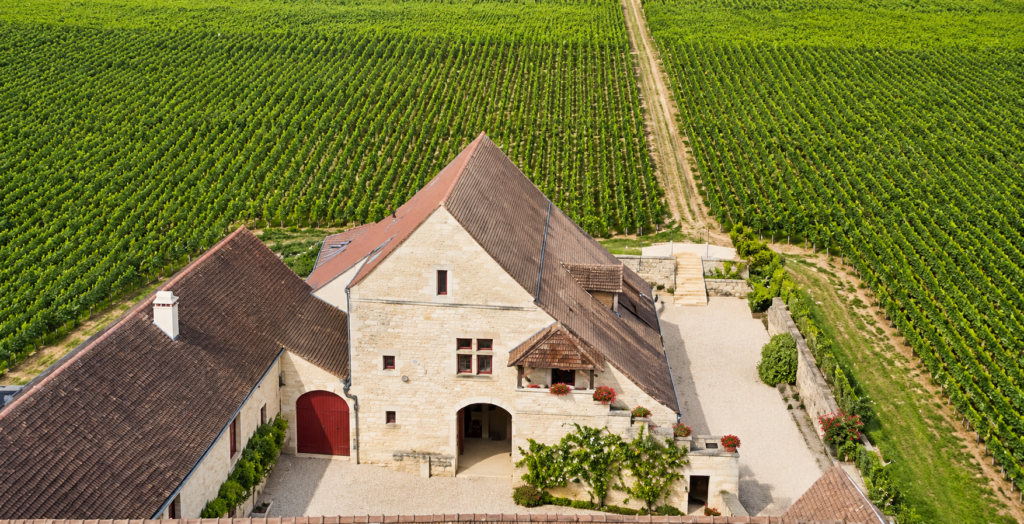
Burgundy is the purest expression of the idea that the place makes the wine. Here, it is not the estate that is ranked but the individual vineyard plot, called a climat. Monks began mapping these plots in the Middle Ages, noting which ones consistently gave better wine; in 2015 the Climats of Burgundy were listed as a UNESCO World Heritage Site. The ranking is written into French appellation law, and any producer who owns vines in a Grand Cru plot can make Grand Cru wine.
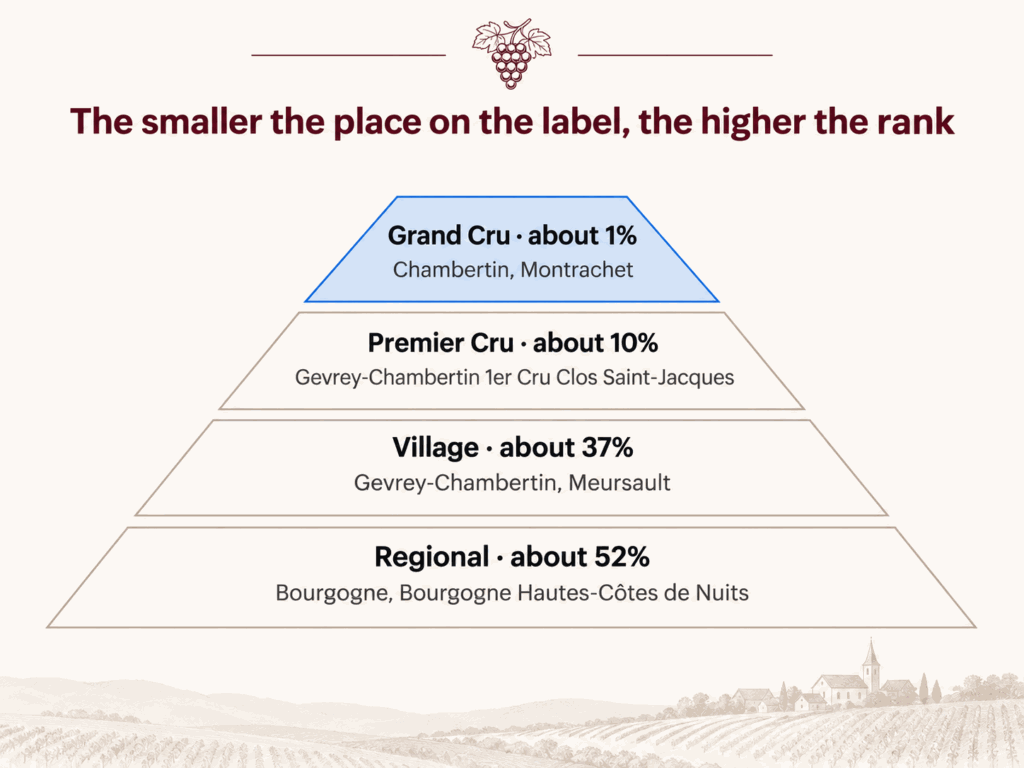
The percentages are approximate shares of Burgundy’s production. Grand Cru is truly rare: around 1% of the region’s wine.
Reading the label. As our French wine regions guide explains, the shorter the place name, the higher the rank. What the label does not tell you is that the system only works downwards: a producer may legally declassify Grand Cru grapes (from young vines or a weak vintage) into a Premier Cru or village wine, but can never promote a lower plot. A Grand Cru on the label therefore always means Grand Cru land.
Chablis follows the same logic with its own vocabulary: Chablis Grand Cru (one appellation covering seven climats such as Les Clos, Vaudésir and Valmur), Chablis Premier Cru (around 40 climats such as Montmains or Fourchaume), Chablis, and Petit Chablis.
Because Grand Cru vineyards are shared between many owners, the same Grand Cru can be made by twenty different domaines, with very different results. Clos de Vougeot, for example, is divided between around 80 owners. In Burgundy you always read two things: the vineyard (its potential) and the producer (what was done with it).
Taste it: our shop’s Chablis 1er Cru Montmains, Louis Latour 2013 is a classic Premier Cru label: appellation, “1er Cru”, then the climat name.
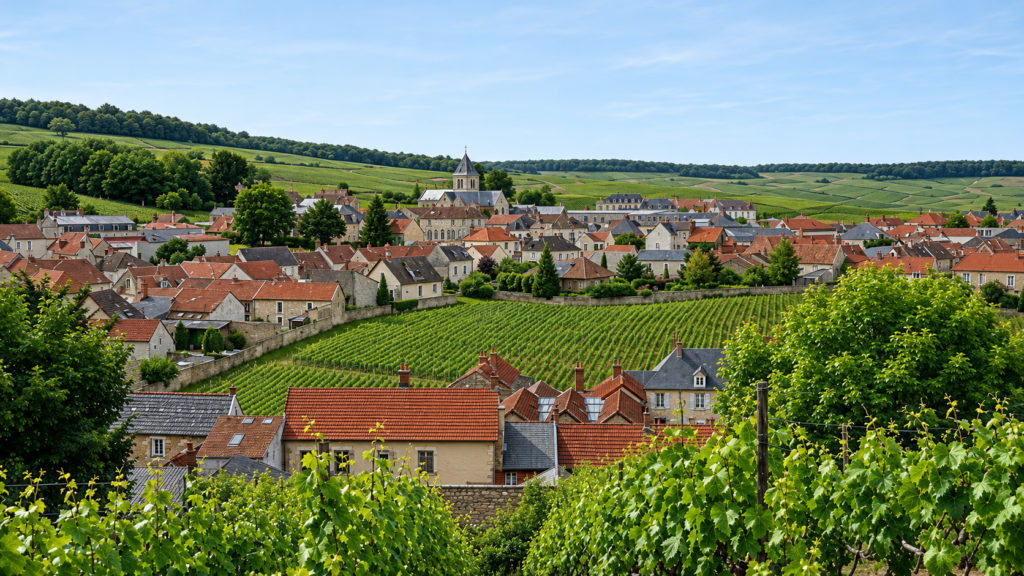
Champagne’s crus come from a very different history: money. After the Champagne riots of 1910–1911, when growers protested against the low prices paid by the big houses, the region created the échelle des crus (“ladder of growths”) in 1919. Every village was given a percentage, and grapes from that village were paid that percentage of a reference price fixed each year.
| Village rating | Status | Number of villages |
|---|---|---|
| 100% | Grand Cru | 17 |
| 90–99% | Premier Cru | 42 |
| 80–89% | No cru status | The other villages, around 260 |
All 17 Grand Cru villages lie in the Marne, on the chalk of the Montagne de Reims (mostly Pinot Noir: Aÿ, Bouzy, Ambonnay, Verzenay…) and the Côte des Blancs (Chardonnay: Avize, Cramant, Le Mesnil-sur-Oger, Oger…).
The fixed-price system was abandoned in the 2000s and grape prices are now set freely, but the village ranking survives on labels. A Champagne labelled “Grand Cru” must be made 100% from grapes grown in Grand Cru villages; “Premier Cru” means grapes from Premier Cru (or Grand Cru) villages only.
This leads to a paradox: most of the great Champagne houses blend grapes from many villages to keep a consistent house style, so their famous cuvées do not carry the Grand Cru mention even when they are built on Grand Cru fruit. In Champagne, the Grand Cru label is most often seen on grower Champagnes (marked RM, récoltant-manipulant) and single-village cuvées.
For the grapes, method and legislation behind every Champagne, see our guide Champagne vs Prosecco vs Cava.
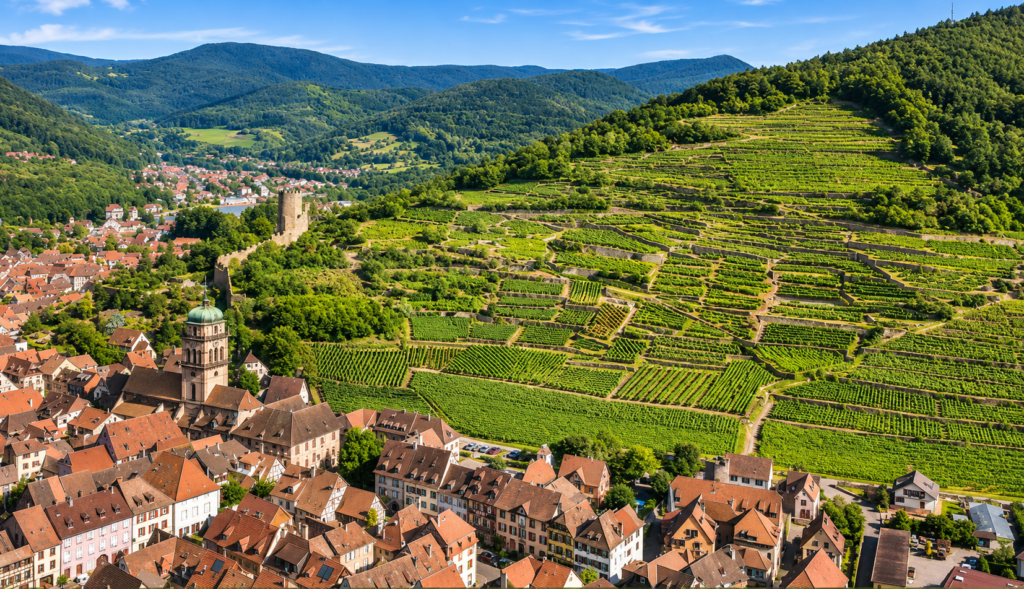
Alsace follows the Burgundian idea — rank the vineyard plot — but with its own twist: the grape variety is usually written on the label.
The Alsace Grand Cru appellation was created in 1975 and expanded in several steps until 2007, when Kaefferkopf became the 51st Grand Cru. Since 2011, each of the 51 Grands Crus is a separate appellation, so the label shows Alsace Grand Cru + the vineyard name (Rangen, Schlossberg, Brand, Rosacker…).
Grand Cru wines face stricter rules than regular Alsace wine — lower yields, riper grapes, hand harvesting — and they are traditionally limited to the four noble white grapes:
The rules are evolving. Sylvaner is allowed in Grand Cru Zotzenberg, a few Grands Crus allow field blends, and since the 2022 vintage Pinot Noir can carry the Grand Cru name in Hengst and Kirchberg de Barr, joined by Vorbourg in 2024 — a sign of how warmer vintages are changing Alsace.
Since 2011 the basic Alsace appellation can also name a village (communale) or a single historic vineyard (lieu-dit) on the label. A Premier Cru tier, between these and Grand Cru, has been under discussion with the French appellation authority for years and is not yet in force. When it arrives, Alsace will have a four-level pyramid very close to Burgundy’s.
Alsace is part of the programme of FSS Intermediate, alongside the other classic French regions.
Not every region ranks its vineyards. In the Rhône Valley, the word cru means something else again: the region’s best villages are promoted to their own appellation, called a cru of the Côtes du Rhône. There are around 17 of them, including Côte-Rôtie, Hermitage and Cornas in the north, and Châteauneuf-du-Pape and Gigondas in the south. There is no Grand Cru or Premier Cru in the Rhône; the top level is the cru appellation itself, and from there, reputation rests on the producer and the single vineyard.
The legends of the Rhône prove it: Guigal’s single-vineyard Côte-Rôties (La Mouline, La Landonne, La Turque), Jean-Louis Chave’s Hermitage and Château Rayas in Châteauneuf-du-Pape sell at Grand Cru prices without any Grand Cru title.
The same is true in Beaujolais, where the 10 crus (Morgon, Fleurie, Moulin-à-Vent…) are village appellations, and largely in the Loire, where the sweet Quarts de Chaume is the only appellation officially allowed to call itself Grand Cru.
To taste the Rhône crus side by side, join our French Premium Class: Rhône Valley.
| What you read on the label | Region | What it really means |
|---|---|---|
| Premier Grand Cru Classé or Premier Cru Classé en 1855 | Bordeaux, Médoc | One of the five First Growths: the top |
| Grand Cru Classé en 1855 | Bordeaux, Médoc | One of the 61 classified châteaux, any tier |
| Premier Cru Supérieur | Sauternes | Château d’Yquem, and only Yquem |
| Premier Grand Cru Classé A or B | Saint-Émilion | The top two tiers of the Saint-Émilion classification |
| Saint-Émilion Grand Cru Classé | Saint-Émilion | A classified château (third tier) |
| Saint-Émilion Grand Cru (no “Classé”) | Saint-Émilion | An appellation, not a ranking |
| Cru Bourgeois / Supérieur / Exceptionnel | Médoc | A separate ranking below the 1855 classification |
| Vineyard name only (Chambertin, Le Montrachet) | Burgundy | Grand Cru |
| Village + 1er Cru + plot (Meursault 1er Cru Charmes) | Burgundy | Premier Cru |
| Chablis Grand Cru + climat (Les Clos) | Chablis | Grand Cru |
| Grand Cru + village (Avize, Aÿ) | Champagne | 100% grapes from Grand Cru villages |
| Premier Cru | Champagne | Grapes from Premier Cru (or Grand Cru) villages |
| Alsace Grand Cru + vineyard (Schlossberg) + grape | Alsace | One of the 51 Grand Cru vineyards |
| Pomerol with no rank (Pétrus, Le Pin) | Bordeaux, Pomerol | No classification exists; judge by reputation |
Two rules of thumb. In Burgundy and Champagne, “Premier Cru” is the second level. In Bordeaux’s Médoc, “Premier Cru” is the first. And in all regions, a name you recognise on the label — the producer — tells you at least as much as the rank.
Usually, yes — but not automatically, and not always worth the price.
Why they are often better. Grand Cru and Premier Cru sites earned their status over centuries because they ripen grapes more reliably: better slope, better drainage, better exposure, more distinctive soil. Their rules impose lower yields and riper fruit. The best classified wines also have the structure to age for decades, which is where they show their full character.
Why a classification is not a guarantee.
| If you want… | Look for… |
|---|---|
| The Grand Cru style at a lower price | Burgundy Premier Cru from a top producer; Bordeaux second wines (Alter Ego, Petit Cheval) |
| Bordeaux quality without the classification premium | Cru Bourgeois Supérieur and Exceptionnel; Fifth Growths |
| Grand Cru Champagne character | Grower Champagnes (RM) from Grand Cru villages |
| Grand Cru white at a fair price | Alsace Grand Cru Riesling; Chablis Premier Cru |
The skill that lets you find these bottles — reading a label, judging a producer, tasting the potential of a young wine — is exactly what a structured wine course trains.
| Wine | Region | Official status | Why it is famous |
|---|---|---|---|
| Château Lafite Rothschild, Latour, Margaux, Haut-Brion, Mouton Rothschild | Bordeaux, Left Bank | Premier Cru Classé 1855 (First Growths) | The five pillars of Bordeaux; benchmark Cabernet blends built for decades |
| Château d’Yquem | Sauternes | Premier Cru Supérieur 1855 | The greatest sweet wine of Bordeaux, able to age for a century |
| Pétrus | Bordeaux, Pomerol | None: Pomerol has no classification | Almost pure Merlot from a tiny clay plateau; one of the most expensive wines in the world |
| Château Cheval Blanc, Ausone | Saint-Émilion | Former Premier Grand Cru Classé A, withdrawn in 2022 | Right Bank legends that chose to leave the ranking |
| Château Figeac, Pavie | Saint-Émilion | Premier Grand Cru Classé A (2022) | The two current “A” estates |
| Romanée-Conti (Domaine de la Romanée-Conti) | Burgundy, Vosne-Romanée | Grand Cru, a monopole of under 2 hectares | Widely seen as the most prestigious red wine on earth |
| Chambertin, Musigny, Le Montrachet | Burgundy | Grand Cru | The reference Grand Crus for red (Chambertin, Musigny) and white (Montrachet) |
| Jacques Selosse | Champagne, Avize | Grand Cru village | Cult grower who redefined grower Champagne |
| Salon, Krug Clos du Mesnil | Champagne, Le Mesnil-sur-Oger | Grand Cru village | Rare, long-lived Blanc de Blancs |
| Trimbach Clos Sainte Hune | Alsace | Inside Grand Cru Rosacker, labelled without it | Considered one of the world’s finest dry Rieslings |
| Guigal “La La” wines, Chave Hermitage, Château Rayas | Rhône | No Grand Cru system | Grand Cru prices and reputation built on producer and site alone |
The pattern is clear: classifications point you to great places, but the legends are made by producers who go beyond what any rule requires — sometimes inside the system, sometimes outside it.
Reading a classification is one thing; tasting a Village, a Premier Cru and a Grand Cru from the same producer side by side is what makes it click. WSA Bangkok, founded by a French sommelier, offers four ways in.
Foundation of Sommelier Skills: Intermediate (2 days, 14 hours, ฿16,000) is built for exactly this subject: French terroirs and appellations, cru classifications and label law, with structured, progressively harder blind tasting. It is the right choice if you need to explain a classified wine to a guest, or to build and sell a French wine list. Assessment combines a written regional theory paper and deductive tasting. Part of the FSS sommelier program.
Three-hour masterclasses with guided tasting, food pairing and expert commentary, each dedicated to one region:
| Class | Price | What it adds to this article |
|---|---|---|
| Bordeaux | ฿5,500 | The classified châteaux of the Médoc and Saint-Émilion |
| Burgundy | ฿5,500 | Climats, villages and the Grand Cru / Premier Cru pyramid |
| Champagne | ฿6,500 | Grand Cru villages, houses and growers |
| Rhône Valley | ฿5,500 | The crus of the north and south, without a Grand Cru system |
Each can also be booked as a private masterclass for a group of friends or colleagues.
Every year, WSA hosts exclusive masterclasses with winemakers from prestigious estates, where the people who make the wine present it themselves — last year’s guest was Château Cheval Blanc. Dates are announced on our social media: follow us on Facebook, Instagram and LINE so you do not miss the next one.
Our Wine Tour in France visits Bordeaux, Burgundy, Champagne and the Rhône in five days — the moment when a Grand Cru stops being a word on a label and becomes a slope you can walk on.
Our wine & accessories shop carries classified wines including Alter Ego de Palmer (Margaux), Petit Cheval (Saint-Émilion), Château d’Yquem 1999 and a Chablis 1er Cru.
In Burgundy, Champagne and Alsace, Grand Cru is the highest level and Premier Cru the second. In Bordeaux’s 1855 classification, Premier Cru (First Growth) is the highest level. Always check which region the wine comes from before comparing the words.
In Burgundy and Champagne, Grand Cru sites are ranked higher and generally produce more concentrated, longer-lived wines. But a Premier Cru from an outstanding producer or vintage can be better than a Grand Cru from an average one.
In the Médoc’s 1855 classification, Premier Cru (First Growth) is the top tier, held by five châteaux: Lafite Rothschild, Latour, Margaux, Haut-Brion and Mouton Rothschild.
Not necessarily. “Saint-Émilion Grand Cru” is an appellation used by many estates. Only “Saint-Émilion Grand Cru Classé” and “Premier Grand Cru Classé A or B” indicate a château ranked in the classification.
33, counting Chablis Grand Cru as one. Together they make up about 1% of Burgundy’s production.
17 Grand Cru villages and 42 Premier Cru villages. A Champagne labelled Grand Cru must be made entirely from grapes grown in Grand Cru villages.
51, each with its own appellation since 2011. Most are planted with Riesling, Gewurztraminer, Pinot Gris and Muscat; three now allow Pinot Noir.
Because Pomerol, where Pétrus is made, has never created a classification. Its reputation rests entirely on the quality of its wine.
A Burgundy Grand Cru vineyard in Vosne-Romanée of under two hectares, owned entirely by Domaine de la Romanée-Conti. Its Pinot Noir is among the rarest and most expensive wines in the world.
Wine & Spirit Academy covers them in FSS Intermediate (2 days, including cru classifications and label law) and in its French Premium Classes on Bordeaux, Burgundy, Champagne and the Rhône.
Grand Cru and Premier Cru are not marketing words. They are the result of centuries of observation, written into law — but each region wrote its own law. In Bordeaux you read the château, in Burgundy and Alsace the vineyard, in Champagne the village. Once you know which, a French wine list stops being a wall of names and becomes a map.
→ Classifications and label law in two days: FSS Intermediate (฿16,000)
→ One region at a time: French Premium Classes in Bordeaux, Burgundy, Champagne and the Rhône
→ The complete sommelier pathway: the FSS program, from Basic to Essentials
Questions? Call 099-016-8838 (Mon–Fri, 9:00 am–8:00 pm) or message us on LINE. Keep reading: French Wine Regions Explained, Cabernet Sauvignon vs Merlot vs Pinot Noir and Champagne vs Prosecco vs Cava.

By Wine & Spirit Academy (WSA Bangkok) The short answer:
By Wine & Spirit Academy (WSA Bangkok) The short answer: